
Начать брокерскую компанию в 2026 году все еще возможно, но это не легкий бизнес. Он находится на пересечении регулирования, технологий, операций и доверия. Если вы хотите сделать это правильно, вам нужно больше, чем торговое приложение и юридическое лицо. Вам нужна работоспособная бизнес-модель, правильная юрисдикция, достаточно капитала, чтобы пережить период настройки, а также партнеры или системы, которые действительно могут поддерживать торговлю, регистрацию, соблюдение требований и защиту клиентских средств.
По этой причине многие новые участники не начинают с полностью независимых брокерских компаний с первого дня. Они начинают с более простой структуры, обычно в качестве вводящего брокера или через решение под маркой. Это позволяет им быстрее выйти на рынок, снизить начальную инфраструктурную нагрузку и сосредоточиться на том, что наиболее важно на начальном этапе: позиционирование продукта, брендинг, привлечение пользователей и клиентский опыт.
Что на самом деле делает брокерская компания
На базовом уровне брокерская компания — это компания, которая предоставляет инвесторам доступ к рынку. Розничные клиенты не подключаются напрямую к фондовым биржам. Они открывают счет у брокера, пополняют его, размещают сделки через платформу брокера и полагаются на этого брокера в вопросах операционной и регуляторной стороны транзакции.
На первый взгляд это звучит просто, но на практике брокер выполняет несколько задач одновременно.
Он должен принимать клиентов и проверять, кто они. Он должен обрабатывать заказы и отправлять их в правильное место исполнения или к партнеру. Он должен вести учет, генерировать отчеты и управлять запросами на поддержку. Если он непосредственно участвует в хранении или расчетах, он также должен гарантировать, что активы клиентов защищены и должным образом разделены. И, помимо всего этого, он должен работать в рамках строгого соблюдения норм.
Вот почему открытие брокерской компании не то же самое, что запуск обычного финтех-приложения. Вы не просто создаете интерфейс. Вы создаете или подключаетесь к регулируемой операционной системе для деятельности с ценными бумагами.
Общие модели брокериджа
Существует несколько способов, как обычно структурируется этот бизнес.
Розничные брокерские компании обслуживают индивидуальных инвесторов, обычно через мобильное приложение или веб-платформу с сильным акцентом на удобство использования.
Институциональные брокеры работают с фондами, фирмами или профессиональными клиентами с высоким объемом и обычно требуют совершенно другой операционной модели.
Вводные брокеры являются общим начальным пунктом для новых компаний. Они управляют отношениями с клиентами и взаимодействием на переднем плане, но полагаются на другого регулируемого партнера для выполнения таких функций, как клиринг, хранение или расчет.
Для основателей, впервые выходящих на рынок, последняя модель часто является самым реалистичным местом для начала.
Что вам нужно перед началом
Прежде чем переходить к лицензированию, технологиям или поставщикам, полезно быть честным в отношении того, какой именно бизнес вы собираетесь строить. Многие брокерские проекты теряют время, потому что основатели начинают сравнивать регуляторов, платформы и поставщиков белых ярлыков, прежде чем они решат, как должен выглядеть запуск.
Сначала вам следует определить несколько основ.
В какой стране или регионе вы сначала будете работать?
Кто ваш целевой клиент?
Вы будете предлагать только акции и ETFs, или более широкий набор инструментов?
Хотите ли вы с самого начала стать полностью лицензированным, или запустить через партнерскую модель?
Вы пытаетесь создать долгосрочную инфраструктуру или быстро выйти на рынок и протестировать спрос?
Это не мелкие детали. Они формируют почти каждое последующее решение. Юридическая структура, стоимость, сроки и даже список поставщиков будут выглядеть по-разному в зависимости от того, как вы на них ответите.
Регуляторные требования
Регулирование является первым серьезным барьером для входа, и к нему следует относиться именно так. Брокерская компания не может просто «запуститься», потому что продукт готов. Юридическая структура должна соответствовать деятельности, а деятельность должна быть разрешена в юрисдикциях, где компания планирует работать.
Не существует универсальной брокерской лицензии, которая действовала бы повсюду. Требования варьируются в зависимости от страны, бизнес-модели и конкретных услуг, которые предоставляет компания. Компания, которая только знакомит клиентов с партнером, может столкнуться с совершенно другим регулирующим процессом по сравнению с той, которая сама осуществляет сделки или управляет активами клиентов.
Тем не менее, те же самые широкие темы встречаются на большинстве рынков.
Вам обычно необходимо получить какую-либо форму лицензии, регистрации или утверждённой модели партнёрства. Регуляторы и контрагенты хотят видеть, что у бизнеса есть реальное управление, достаточно капитала, документированные контроли и ответственные за соблюдение требований. Если компания управляет клиентскими деньгами или ценными бумагами напрямую, требования становятся значительно жестче.
На практике основатели должны ожидать, что регулирование повлияет как минимум на эти области:
Лицензирование или авторизация.
В зависимости от юрисдикции компании может потребоваться зарегистрироваться в качестве брокера-дилера, инвестиционной фирмы, посредника по ценным бумагам или другой регулируемой категории.
Капитальные требования.
Во многих юрисдикциях требуется минимальный ликвидный капитал. Сумма может значительно варьироваться в зависимости от предлагаемых услуг и того, берет ли компания на себя хранение или другие регулируемые обязанности.
Контроль AML и KYC.
Фирма должна проверять клиентов, сверять их с санкционными списками, следить за подозрительной деятельностью и вести надлежащую документацию.
Защита активов клиента.
Если брокерская компания участвует в удержании средств или ценных бумаг, ей необходимы надежные процедуры по сегрегации, сверке и защите.
Отчетность и надзор.
Текущая отчетность, обязательства по аудиту и внутренние контроли являются частью бизнеса, а не дополнительной опцией.
Это одна из главных причин, по которой многие стартапы выбирают более легкий путь на начальном этапе. Чем больше ответственности вы берете на себя напрямую, тем больше затрат, времени и сложности вам нужно учесть перед запуском.
Самый быстрый способ войти: модели брокеров и белых меток
Многие основатели предполагают, что им нужно создать полноценное брокерское агентство, чтобы выйти на рынок. На самом деле, это часто самый медленный и дорогой способ начать.
Более практичным вариантом является начать какIntroducing broker или использовать решение для брокерских услуг с белой маркой.
С моделью вводящего брокера ваша компания сосредотачивается на клиентской части бизнеса. Это обычно означает брендинг, внедрение, процессы открытия счетов, опыт на платформе, поддержку и рост. Более тяжелые операционные функции, такие как хранение, клиринг или расчет, обрабатываются более устоявшимся лицензированным партнером.
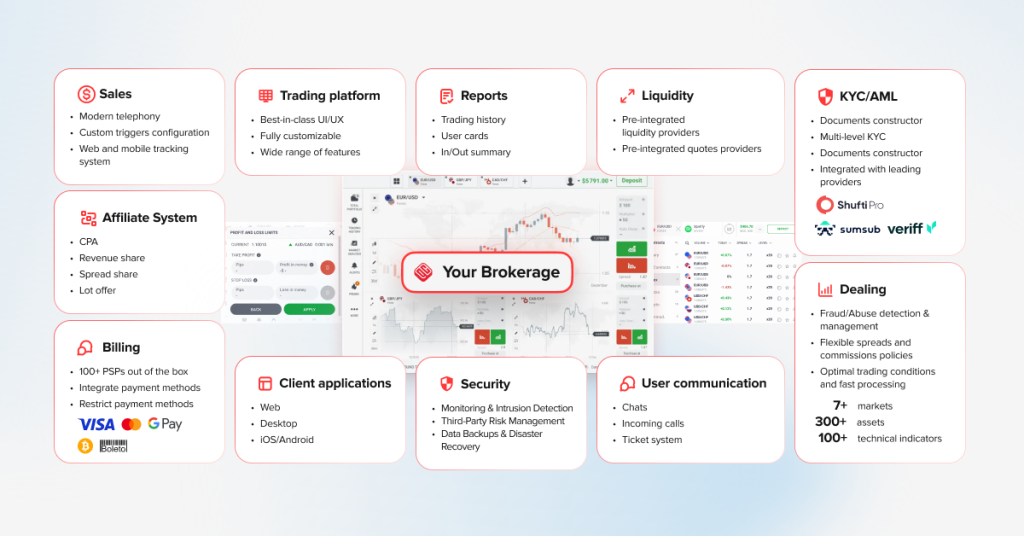
Настройка white-label идет на шаг дальше с технологической стороны. Вместо того чтобы строить всю систему с нуля, вы запускаетесь на основе существующей платформы и инфраструктурного слоя под своим брендом. В зависимости от поставщика это может включать торговый интерфейс, бэк-офис, CRM, инструменты для онбординга, модули отчетности и интеграции с KYC, платежами, хранением или партнерами по ликвидности.
Эта опция популярна не случайно: она может значительно сократить путь к запуску. Вы не тратите первый год на перестройку систем, которые уже существуют на рынке. Вы можете двигаться быстрее, сократить инженерные затраты и сосредоточиться на коммерческой стороне бизнеса.
Это не означает, что белая этикетка устраняет необходимость в соблюдении норм, юридическом обзоре или должной осмотрительности. Это просто означает, что вы не несете такую же степень технической нагрузки с первого дня.
Точные шаги для начала брокерской деятельности
Процесс становится гораздо проще, когда его разбивают на реальные операционные шаги, а не общие идеи. Ниже приведена практическая последовательность, которой могут следовать основатели.
1. Определите объем запуска
Начните с четкого предложения, а не с чрезмерно обширной презентации видения. Выберите первый рынок, целевую аудиторию, инструменты, которые вы хотите поддерживать, и коммерческую модель. Сохраняйте начальное предложение достаточно узким, чтобы его можно было действительно запустить и успешно эксплуатировать.
Например, запуск брокерской компании по наличным акциям на одном рынке очень отличается от попыток поддерживать транснациональных клиентов, маржинальные счета и несколько классов активов с первого дня. Простота на этапе запуска обычно улучшает как скорость, так и выживаемость.
2. Выберите бизнес-модель
Решите заранее, собираетесь ли вы создать полностью лицензированное брокерское предприятие, запускаться в качестве вводящего брокера или использовать настройку в стиле white-label или BaaS. Это решение влияет на все остальное: ваши капитальные потребности, объем соблюдения норм, требования к партнерам и время выхода на рынок.
Для многих новых фирм правильный ответ — это не «полный контроль сразу». Это «сначала запустить рабочую версию, а затем расширять структуру позже».
3. Настройте компанию и правовую структуру
Как только модель станет ясной, включите бизнес и привлечите юридических консультантов с реальным опытом работы в сфере ценных бумаг или брокериджа. Это этап, на котором вы определяете структуру собственности, разрабатываете основную документацию, планируете регуляторный путь и начинаете подготовку материалов, необходимых партнерам, поставщикам или регуляторам.
Это также тот момент, когда слабые предположения становятся очевидными. Если план запуска зависит от структуры, которая не соответствует целевой юрисдикции, лучше узнать об этом здесь, чем после подписания с поставщиками.
4. Правильно составьте бюджет
Многие основатели, которые впервые создают бизнес, недооценивают стоимость брокерских услуг, потому что сосредотачиваются только на видимых расходах: юридические расходы, сборы платформы и несколько наймов. На самом деле бизнесу также нужны средства для соблюдения правил, операций по вводу в эксплуатацию, поддержки, отчетности, безопасности, ввода в эксплуатацию партнеров и задержек.
Ваш бюджет должен покрывать как затраты на запуск, так и период после запуска, когда доходы могут быть ограничены. Брокерская компания с недостаточным запасом средств может оказаться в худшем положении: оперативно функционируя, но с недостаточными ресурсами и неспособная безопасно масштабироваться.
5. Выберите ключевых партнеров
Это один из самых важных шагов во всем процессе. Брокерская компания сильно зависит от внешних поставщиков, если она не строит все внутри компании, что большинство стартапов не делает.
Типичные партнеры могут включать:
- партнер по хранению или клирингу
- платформа или провайдер с белой меткой
- Поставщики KYC и AML
- банковские и платежные провайдеры
- поставщики рыночных данных
- консультанты по юридическим вопросам и соблюдению норм
- инструменты коммуникации с клиентами или CRM
- рисковые или отчетные системы
Качество этих партнеров напрямую влияет на качество пользовательского опыта. Плавное подключение, надежное выполнение, быстрые выводы, точные отчеты и отзывчивая поддержка не происходят случайно. Они зависят от операционного стека, стоящего за брендом.
6. Решите, строить ли технологию или купить
Здесь основатели часто теряют время. Существует сильное искушение создать индивидуальную платформу, потому что это кажется «серьезным» путем. Но если у компании нет глубоких внутренних знаний и четкой долгосрочной причины владеть стеком, индивидуальная разработка может стать дорогим отклонением.
Вот почему вариант с белой этикеткой часто стоит серьезного рассмотрения. Он позволяет компании начать быстрее, потому что основная торговая среда уже построена. Вместо того чтобы тратить месяцы на архитектуру, интеграции и тестирование с нуля, команда может адаптировать существующее решение под свой собственный бренд и рабочий процесс.
Для нового участника рынка это часто имеет больше смысла с точки зрения бизнеса, чем пытаться разработать все внутренними силами до того, как будет подтверждена рыночная позиция.
7. Обеспечьте соблюдение норм и операций перед запуском
Брокерская компания не должна рассматривать соблюдение нормативных требований как заключительный этап. К тому времени, когда вы будете готовы начать работу с пользователями, ваши основные операционные контрольные меры уже должны быть внедрены.
Это включает в себя процесс адаптации, проверки KYC, скрининг AML, сбор документов, процедуры эскалации, обработку жалоб, ведение учета и внутренние роли для контроля. Также вам нужны четкие процедуры для инцидентов, неудачных транзакций, ограничений для пользователей и подозрительной активности.
Это не гламурная работа, но именно она отделяет брокерскую компанию, готовую к запуску, от рискованной.
8. Протестируйте полный путь клиента
Перед тем как открыть платформу для реальных пользователей, протестируйте процесс от начала до конца. Не только счастливый путь, но и трудные моменты тоже.
Тестовая регистрация, проверка личности, первый депозит, первый заказ, неудачный заказ, вывод средств, генерация отчетов, ограничения на счет и запросы в поддержку. Если брокер предлагает кредитное плечо или продвинутые типы заказов, протестируйте и эти сценарии.
Важно не только то, хорошо ли выглядит продукт, но и то, сохраняет ли он целостность, когда его начинают использовать реальные люди.
9. Запуск поэтапно
Постепенный запуск обычно более разумен, чем крупный публичный запуск. Начните с небольшой группы, контролируемой географии или ограниченного объема продукта. Это дает бизнесу время для мониторинга качества внедрения, выявления операционных проблем и улучшения продукта перед масштабированием.
Доверие тяжело построить и легко потерять в финансовых услугах. Обдуманный запуск часто лучше громкого.
Технологическая инфраструктура, которая вам понадобится
Даже если вы используете партнеров для части операции, брокерская компания все равно нуждается в надежном технологическом стеке.
Платформа фронтенда — это часть, которую видят пользователи. Она должна быть быстрой, стабильной и удобной для навигации, с основными функциями, такими как доступ к аккаунту, ввод заказов, просмотр портфолио и отчетность.
За этим находится слой управления заказами, который обрабатывает поток заказов и связывает инструкции с соответствующими системами исполнения или партнёрами.
Затем есть бэк-офисная среда, где управляются учетные записи, журналы активности, выписки, сборы и операционные рабочие процессы.
Вам также нужен комплаенс-уровень, который включает KYC, проверку на соответствие AML, мониторинг транзакций и поддержку отчетности.
И наконец, есть менее видимая, но не менее важная часть: платежи, уведомления, разрешения пользователей, средства управления безопасностью и внутренние администраторские инструменты.
Другими словами, брокерская компания — это не одна платформа. Это цепочка систем, которые должны работать вместе, не нарушая клиентский опыт.
Модели исполнения: A-Book, B-Book и Гибридная
Эта тема более распространена в обсуждениях CFD, FX и торговле с использованием кредитного плеча, чем в обычном брокерском обслуживании наличных акций. Если она включена в статью о брокерских услугах, ее следует аккуратно оформить.
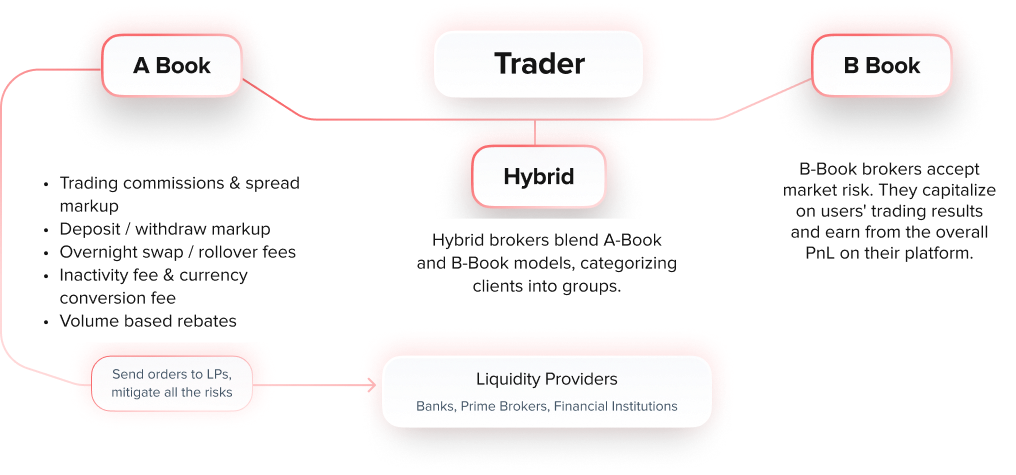
Модель A-Book обычно означает, что заказы клиентов передаются внешним контрагентам или площадкам ликвидности. Фирма, как правило, зарабатывает на комиссиях, сборах или на разнице в ценах.
Модель B-Book обычно означает, что компания интернализирует часть клиентского потока и может принимать противоположную сторону сделки. Это может увеличить маржу, но также поднимает вопросы управления рисками и конфликта интересов.
Гибридная модель объединяет оба подхода, принимая решения о маршрутизации на основе внутренней политики, сегмента клиента, типа продукта и управления рисками.
Для стандартного стартап-брокера, сосредоточенного на торгуемом наличном активах, более важное раннее решение, как правило, не связано с A-Book или B-Book, а касается того, будет ли исполнение сделок, хранение и клиринг осуществляться напрямую или через партнеров.
Клиринг, расчет и хранение
Это одна из областей, которую многие новички недооценивают, потому что пользователи не видят её напрямую. Но как только начинается торговля, именно здесь важна настоящая операционная основа бизнеса.
Клиринг — это процесс, который подтверждает и управляет обязательствами, возникающими в результате сделки.
Расчет — это завершение сделки, когда наличные деньги и ценные бумаги фактически обмениваются.
Хранение относится к удержанию и защите активов клиентов.
Для стартапа эти функции часто лучше выполнять через опытных партнеров, а не строить их внутренне. Это еще одна причина, почему введение моделей брокеров и белых ярлыков может быть разумным на ранних стадиях. Они позволяют компании выйти на рынок, не беря на себя все тяжелые операции.
Соблюдение и управление рисками
Брокерская компания нуждается в мышлении, ориентированном на соблюдение норм, но эта фраза имеет значение только в том случае, если она переводится в реальную практику.
Как минимум, фирме необходима надлежащая проверка клиентов, мониторинг транзакций, проверки на наличие санкций, внутренние процессы одобрения и четкие обязанности по контролю. Также необходимы процедуры для обработки подозрительной активности, жалоб пользователей, операционных инцидентов и вопросов защиты данных.
Кибербезопасность важна так же, как и формальное соблюдение норм. Брокерская компания обрабатывает чувствительные данные, финансовые потоки и доступ к счетам. Слабые внутренние контрольные механизмы, плохое управление доступом или сбои в безопасности поставщиков могут нанести серьезный ущерб очень быстро.
Хорошее управление рисками не только связано с рыночным риском. Это также связано с операционной дисциплиной.
Затраты и капитал
Нет единого числа, которое бы ответило на вопрос: «Сколько стоит открыть брокерскую компанию?» Стоимость во многом зависит от того, какой тип брокерской компании вы строите и сколько инфраструктуры вы берете на себя.
Запуск через вводящего брокера или структуру с белой маркой может потребовать гораздо меньших первоначальных инвестиций, чем полностью лицензированная брокерская компания с собственным операционным стеком. С другой стороны, более независимая структура предоставляет больший контроль и потенциально больше гибкости в дальнейшем.
Основные области затрат обычно включают:
- юридическая и консультативная работа
- лицензирование или подключение партнёров
- регуляторный капитал, где это требуется
- платформа и инфраструктурные сборы
- Инструменты KYC и AML
- персонал
- поддержка операций
- страхование
- данные рынка
- банковские услуги и платежи
- требования к безопасности и аудиту
На что основатели действительно должны обращать внимание, так это не только на стоимость запуска, но и на стоимость поддержания своей репутации и работы после запуска.
Общие проблемы, с которыми сталкиваются новые брокерские компании
Первый вызов — это доверие. Люди не охотно доверяют деньги незнакомым финансовым брендам, особенно на переполненном рынке. Платформа может выглядеть безупречно, но пользователи все равно будут спрашивать: кто регулирует эту компанию, где хранятся активы, кто партнеры и что происходит, если что-то пойдет не так?
Второй вызов — это сроки. Юридическая проверка, переговоры с партнерами, процессы адаптации и технические интеграции часто занимают больше времени, чем ожидалось.
Третье – это операционная глубина. Легко недооценить, сколько работы стоит за простыми действиями пользователя, такими как открытие счета, его пополнение, размещение сделки или запрос на вывод средств.
Четвёртое — это фокус. Некоторые основатели пытаются запустить слишком много продуктов, в слишком многих рынках, с слишком большим контролем над инфраструктурой слишком рано. Это обычно замедляет бизнес, а не укрепляет его.
Заключение
Начало работы фондовой брокерской компании в 2026 году все еще является реальной возможностью, но это не простая задача. Побеждают обычно не те фирмы, которые пытаются построить все сразу. Побеждают те, которые определяют четкие рамки запуска, выбирают правильную структуру, используют надежных партнеров и с самого начала серьезно относятся к соблюдению норм и операционной деятельности.
Для многих основателей это означает, что не стоит сразу начинать как полностью независимое брокерское агентство. Подход с белой этикеткой или введение брокера может быть намного более разумным первым шагом. Это позволяет компании начать быстрее, снизить техническую сложность и выйти на рынок с более реалистичной бизнес-моделью.
Основная идея проста: запустить что-то солидное, а не что-то чрезмерное. В брокерском деле важнее доверие и исполнение, чем амбиции на бумаге.

