Churn is the rate at which customers stop using your product or service.
Put simply: it shows how fast people leave. If customers leave faster than you replace them, the business slowly bleeds out. Even if sales look good on paper.
For digital entrepreneurs, churn isn’t just a metric. It’s a signal. It tells you whether people actually get value after the first click, deposit, or login.
What Is Churn? A Plain-English Explanation
Churn answers one simple question:
How many customers did you lose over a period of time?
The most common formula looks like this: Customers lost ÷ customers at the start of the period
Example:
- You start the month with 1,000 users
- 60 stop using the platform
- Monthly churn = 6%
That’s it. No mystery. But there’s an important nuance many founders miss.
You can measure churn in users or in money.
- Customer churn: how many people leave
- Revenue churn: how much recurring revenue disappears
In most subscription and broker models, revenue churn matters more. Losing one large account can hurt more than losing ten small ones.
Why Churn Matters More Than You Think
Churn quietly impacts everything:
- Lifetime value (LTV)
- Marketing efficiency
- Payback period on ads
- Cash flow predictability
- Company valuation
Here’s a brutal truth: If churn is high, growth is fake.
You’re constantly filling a bucket with holes in the bottom.
Many digital entrepreneurs obsess over acquisition. Ads, funnels, creatives. Meanwhile, users slip away after the first week.
Fixing churn usually beats scaling traffic. Every time.
The Main Types of Churn You Should Understand
Voluntary vs. Involuntary Churn
- Voluntary churn: the user decides to leave
- Involuntary churn: technical reasons (failed payments, blocked cards, compliance issues)
In many businesses, 10–30% of churn is involuntary and fixable with better systems.
Gross vs. Net Churn
- Gross churn: total lost users or revenue
- Net churn: losses minus expansion from existing users
Strong platforms aim for low gross churn and ideally negative net churn, where upgrades outweigh losses.
Early vs. Late Churn
This distinction matters a lot.
- Early churn happens in the first days or weeks
- Late churn happens after months of usage
Early churn is almost always an onboarding failure.
What Is a “Good” Churn Rate?
There’s no universal number, but patterns exist.
| Business model | Typical monthly churn |
| B2B SaaS | 1–3% |
| B2C SaaS | 3–7% |
| Retail broker platforms | 4–10% |
| High-risk trading products | 8–15% |
Broker platforms sit in a tough zone.
Money is involved. Emotions are involved. Losses are inevitable.
That’s why churn management in brokerage isn’t a side task. It’s core infrastructure.
How to Analyze Churn Properly (Not Just with a Formula)
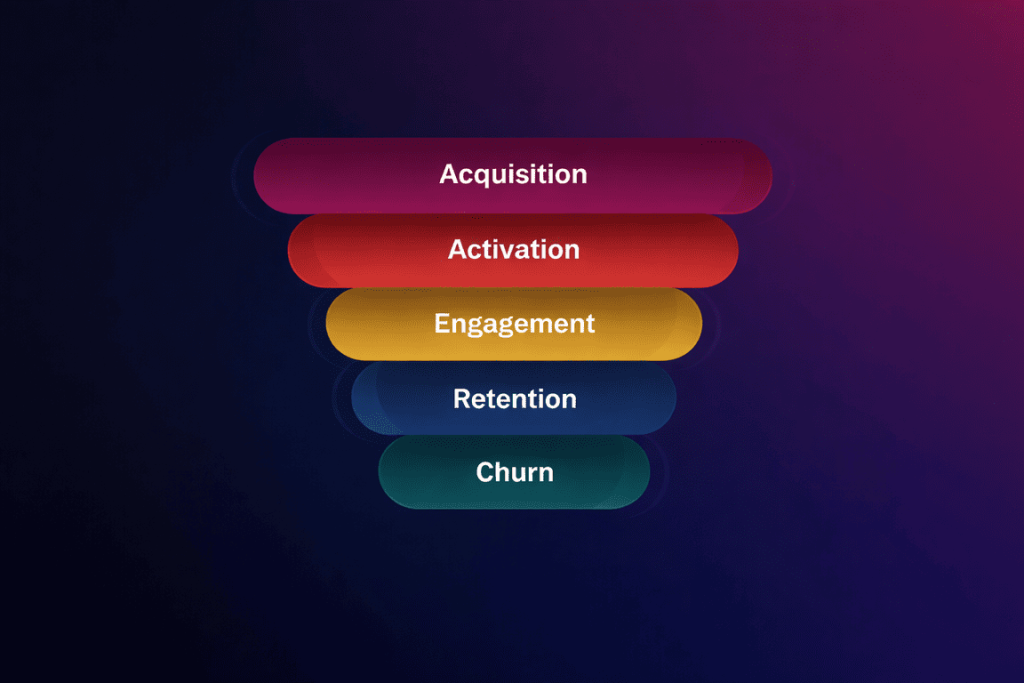
Cohort Analysis: Stop Looking at Averages
Averages hide problems.
Cohort analysis groups users by:
- Signup month
- Acquisition channel
- Country or regulation
- Product type
You might discover that:
- Users from paid search churn twice as fast
- One onboarding version performs far worse
- Certain regions leave earlier than others
This is where real insights appear.
Behavioral Signals Before Churn
Churn rarely happens overnight.
There are warning signs:
- Logins become less frequent
- Trades or actions slow down
- Support messages stop
- Emails go unopened
By the time a user “churns”, the decision was often made weeks earlier.
Good platforms don’t wait for cancellation.
They act when behavior changes.
Segment-Level Reality
Churn is uneven.
Often:
- Beginners churn fast
- Mid-level users stay longest
- High-risk users churn violently after losses
Segment users by behavior, not just demographics. That’s where leverage lives.
Why Customers Actually Churn (Beyond the Obvious)
People love to blame:
- Pricing
- Competition
- Market conditions
Those are rarely the real reasons.
In practice, churn happens because users:
- Feel lost
- Feel stupid
- Feel unlucky
- Feel ignored
- Feel stressed
Especially in financial products.
People don’t churn because they lost money.
They churn because they don’t understand why they lost it.
How Broker Platforms Prevent Churn in Practice
Broker platforms face a unique problem.
Churn isn’t just logical.
It’s emotional.
Here’s how strong platforms deal with it.
The First 7–14 Days Are Everything
Most users who churn will do it early.
Top brokers focus heavily on:
- Simple onboarding
- Clear next steps
- Fast first action
- Demo-to-real transitions that feel safe
The goal is not profit. The goal is confidence. If users survive the first two weeks, retention jumps.
You may also like


Demetris Makrides
October 23, 2025
Real-Time Behavioral Monitoring
Modern broker platforms track:
- Win/loss streaks
- Risk escalation
- Long inactivity gaps
- Sudden behavior shifts
When patterns change, the system reacts:
- Education prompts
- Risk warnings
- Manager outreach
- Strategy adjustments
This isn’t surveillance. It’s early intervention.
Expert Insight #1
In several broker platforms I’ve worked with, the single biggest churn predictor wasn’t losses – it was silence. Users who stopped interacting, even after winning, churned faster than those who complained.
Account Managers as Retention Specialists
In many broker businesses, account managers are misunderstood.
Their real job isn’t pushing volume.
It’s:
- Explaining outcomes
- Managing expectations
- Calming emotional reactions
- Keeping users grounded
A short human conversation after a bad trading day can extend customer lifetime by months.
Automation helps. Humans still matter.
Incentives That Support Behavior (Not Addiction)
Bonuses can backfire if used badly.
Smart brokers use:
- Activity-based rewards
- Education unlocks
- Loss-mitigation tools
- Loyalty tiers
The focus is not “trade more”.
It’s “trade smarter and stay longer”.
Retention beats short-term volume.
Education as a Retention Asset
Education changes the churn curve.
Platforms that invest in:
- Webinars
- Market explainers
- Strategy breakdowns
- Post-trade analysis
See users:
- Stay calmer
- Trade longer
- Churn less emotionally
Education turns confusion into context. And context keeps people around.
Expert Insight #2
One broker saw churn drop after adding short post-loss explanations. Not courses. Just 2–3 sentences explaining what happened. Users didn’t win more — but they stayed.
Platform Trust and UX
Nothing accelerates churn like technical pain.
Users leave fast when they see:
- Platform freezes
- Slippage surprises
- Confusing P&L displays
- Slow withdrawals
Strong brokers obsess over:
- Stability
- Transparency
- Speed
- Clear numbers
Trust is a retention currency. Lose it once, and users are gone.
Common Churn Mistakes Broker Platforms Make
- Chasing new users while ignoring existing ones
- Treating all traders the same
- Reacting only after churn happens
- Using discounts instead of value
- Ignoring emotional triggers
Most churn problems are predictable. They just aren’t addressed early enough.
A Simple Framework to Reduce Churn
- Decide what churn really means for your business
- Track it by cohorts, not averages
- Identify early warning signals
- Segment users by behavior
- Combine automation with human touch
- Review retention metrics monthly
Retention isn’t a campaign. It’s a system.
Why Churn Matters So Much for Broker Businesses
In brokerage, churn affects:
- Regulatory exposure
- Marketing ROI
- Brand reputation
- Long-term valuation
If you’re building or scaling a broker platform, churn isn’t optional knowledge. It’s foundational.
Final Thought
Growth looks impressive. Retention builds real businesses. Broker platforms that survive long-term don’t just acquire users. They understand them, guide them, and keep them grounded.

