
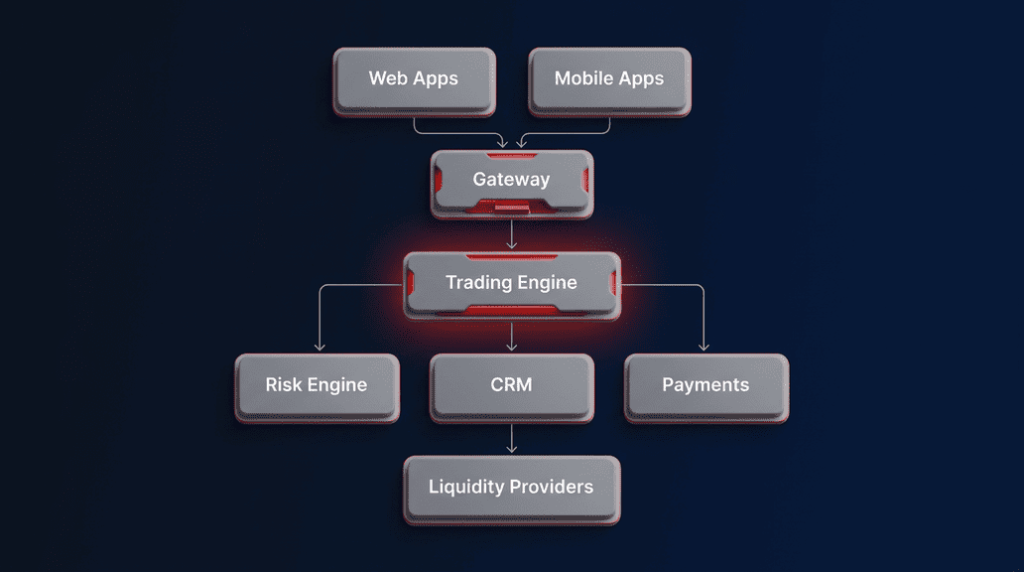
ซอฟต์แวร์นายหน้าคือสิ่งที่ทำให้คุณสามารถลงทะเบียนลูกค้า แสดงราคา ส่งคำสั่ง จัดการความเสี่ยง และดำเนินการทำงานประจำวันภายใต้แบรนด์ของคุณ ในทางปฏิบัติ มันไม่ใช่การเข้าสู่ระบบเพียงครั้งเดียว แต่มันคือหลายระบบที่ต้องทำงานร่วมกัน: แอปการค้า, ส่วนหลัง, CRM, สะพานเชื่อมกับสภาพคล่อง, และกระบวนการตรวจสอบความถูกต้อง
แบรนด์ใหม่ส่วนใหญ่มักใช้แพ็กเกจแบบไวท์เลเบลแทนที่จะสร้างซอฟต์แวร์ที่มีคุณภาพระดับการแลกเปลี่ยนจากศูนย์ ผู้ให้บริการแบบครบวงจรจะรวมชิ้นส่วนเหล่านั้นเข้าด้วยกันเพื่อให้คุณสามารถใช้เวลาในการสร้างแบรนด์ เครื่องมือ และนโยบายแทนที่จะต้องรวมผู้ขายนับสิบเข้าด้วยกัน
หากคุณเป็นผู้ประกอบการ, โบรกเกอร์แนะนำ (IB), หรือพันธมิตรที่ต้องการเป็นเจ้าของธุรกิจและไม่เพียงแค่ส่งการเข้าชม, คุณต้องมีภาพที่ชัดเจนว่าอะไรเป็นสิ่งจำเป็น, อะไรสามารถรอได้, และที่ไหนที่การเปิดตัวมักจะหยุดชะงัก.
งานจะง่ายขึ้นในการกำหนดขอบเขตเมื่อคุณเข้าใจชัดเจนว่า นายหน้าเป็นอย่างไร และเงินและคำสั่งจริงๆ เคลื่อนที่อย่างไร。
ซอฟต์แวร์นายหน้าค้าหุ้นรวมอะไรบ้าง
คิดเป็นชั้น ลูกค้าจะเห็นเพียงแค่ชั้นบน ส่วน P&L ของคุณและหน่วยงานกำกับดูแลของคุณจะสนใจทุกอย่างที่อยู่ด้านล่าง ส่วนต่างๆ ด้านล่างนี้จะอธิบายแต่ละส่วนในภาษาที่เข้าใจง่าย ประมาณว่าเป็นอย่างไรในผลิตภัณฑ์ที่ไม่มีแบรนด์แบบครบถ้วน
แพลตฟอร์มการซื้อขายและแอปพลิเคชันลูกค้า
เทอร์มิเนล การซื้อขาย คือสิ่งที่เทรดเดอร์เห็น: แผนภูมิ, คำสั่งซื้อ, รายการเฝ้าดู, หน้าจอบัญชี, และมักจะมีขั้นตอนการชำระเงินในกระบวนการเดียวกัน ผลิตภัณฑ์ที่แข็งแกร่งจะส่งมอบลูกค้าเว็บและเดสก์ท็อป, แอป iOS และ Android ที่เป็นเนทีฟ, และโดยทั่วไปจะมีแอปเว็บแบบก้าวหน้าเพื่อให้ผู้เยี่ยมชมมือถือไม่ต้องถูกบังคับผ่านร้านแอปในวันแรก.
เบื้องหลังกราฟคุณต้องการชุดเครื่องมือวิเคราะห์ทางเทคนิคที่จริงจัง: ตัวชี้วัดที่รวมกลุ่มหลายตัว, เครื่องมือการวาด, และฟีเจอร์การมีส่วนร่วมที่เลือกได้ เช่น ทัวร์นาเมนต์, ตารางคะแนน, แชท, และข่าวตลาด ฟีเจอร์การดำเนินการอาจรวมถึงการเทรดด้วยคลิกเดียว, การป้องกันความเสี่ยง, และการป้องกันยอดคงเหลลลบ ขึ้นอยู่กับผลิตภัณฑ์ หากคุณวางแผนที่จะฝังการเทรดไว้ที่อื่น, การเข้าถึง API และตัวเลือก iFrame ก็มีความสำคัญเช่นกัน.
การเริ่มใช้งานและการชำระเงิน (ด้านลูกค้า)
- การเริ่มต้นใช้งาน: การลงทะเบียน, แบบสอบถาม, การอัปโหลดเอกสาร, และสถานะที่มองเห็นได้สำหรับลูกค้า.
- การชำระเงิน: การฝากและการถอนภายในหรือข้างแพลตฟอร์ม โดยมีวิธีการที่จำกัดตามประเทศและนโยบายความเสี่ยง.
- การปรองดอง: ทีมของคุณต้องเห็นว่าสิ่งใดที่ได้รับการอนุมัติ, สิ่งใดที่ล้มเหลว, และสิ่งใดที่ติดขัดโดยไม่ต้องเปิดสเปรดชีตห้าชุด.
CRM และสำนักงานสนับสนุน
สำนักงาน back office คือที่ที่ทีมของคุณทำงาน: การขาย, การสนับสนุน, และการดำเนินงานประจำวัน เครื่องมือ CRM ที่ระดับโบรกเกอร์แตกต่างจากเครื่องมือขายทั่วไปเพราะมันติดตามวงจรชีวิตของลูกค้าและพันธมิตรอย่างครบถ้วน ไม่ใช่แค่การ์ดลูกค้าเป้าหมายเท่านั้น。
- Sales CRM: โทรศัพท์, ทริกเกอร์, และเส้นทางที่ชัดเจนจากลีดแรกจนถึงการรักษาลูกค้า.
- รายงาน: ประวัติการซื้อขาย, โปรไฟล์ผู้ใช้, สรุปบัญชี, เงินเข้าและออก.
- ช่องทางการสนับสนุน: แชท, โทรศัพท์ขาเข้า, และตั๋วในที่เดียว.
- การตลาด: อีเมล, การแจ้งเตือน, ข้อความในผลิตภัณฑ์, รวมถึงการติดตามเว็บและมือถือเพื่อให้คุณเห็นว่าค่ายไหนทำให้บัญชีได้รับเงินจริงๆ.
- พันธมิตร: IB trees, ค่าคอมมิชชั่นตามลำดับชั้น, CPA, แบ่งปันรายได้, แบ่งปันสเปรด, และโมเดลที่คล้ายกัน.
เมื่อชั้นนี้บาง การฝากเงินสามารถไหลได้ในขณะที่การเก็บรักษาและความไว้วางใจของพันธมิตรค่อยๆ ลดลง
โต๊ะบริการ, สภาพคล่อง, และความเสี่ยง
- สภาพคล่องและการเสนอราคา: การเชื่อมต่อกับ LP หนึ่งตัวหรือมากกว่ารวมถึงผู้ให้บริการการเสนอราคา โดยสามารถเพิ่มได้มากขึ้นเมื่อคุณเติบโต
- นโยบายการดำเนินงาน: A-Book, B-Book หรือการจัดส่งแบบผสมควรตรงกับการเปิดเผยข้อมูลและความเสี่ยงที่คุณยอมรับ ไม่ใช่แค่แบบจำลองในสเปรดชีตของคุณ.
- การควบคุมโต๊ะ: การกระจาย, ค่าคอมมิชชั่น, รายการเครื่องมือ, ขีดจำกัดการเปิดเผย, กฎเกณฑ์มาร์จิ้น, การตรวจจับการฉ้อโกงและการละเมิด, และเครื่องมือในการรักษาความเสถียรในการประมวลผลภายใต้ภาระ.
- การตั้งค่าความเสี่ยงที่ไม่สอดคล้องกันหรือการกำหนดเส้นทางที่ไม่ชัดเจนคือวิธีที่โบรกเกอร์ใหม่ล้มเหลวอย่างเงียบ ๆ ก่อนแล้วจึงดังขึ้น
ผู้ให้บริการเรียกเก็บเงินและการชำระเงิน
แพลตฟอร์มการเป็นนายหน้าที่มี ชื่อแบรนด์ของตนเอง มักจะรวมถึงเลเยอร์การเรียกเก็บเงินที่รวมเข้ากับผู้ให้บริการชำระเงินหลายราย (PSPs) ในตัว และความสามารถในการเพิ่มหรือลดวิธีการโดยการแบ่งกลุ่ม คาดหวังการไหลที่สอดคล้องกับ PCI การตรวจสอบการฉ้อโกงรอบๆ การชำระเงิน และกฎเกณฑ์ที่ชัดเจนสำหรับผู้ที่สามารถฝากหรือถอนเงินได้และเมื่อไร
KYC, AML และเครื่องมือการปฏิบัติตาม
- KYC แบบหลายขั้นตอนพร้อมการทำงานเอกสารที่คุณสามารถปรับให้เข้ากับนโยบายของคุณ ซึ่งมักจะรวมถึงตัวสร้างเอกสารและการเชื่อมต่อกับผู้ให้บริการการตรวจสอบชั้นนำ
- การตรวจสอบ AML และบันทึกที่เหมาะสำหรับการตรวจสอบ: ใครอนุมัติอะไร, เมื่อไหร่, และด้วยหลักฐานใด.
- การเข้าถึงตามบทบาทสำหรับพนักงาน, การสำรองข้อมูล, การตรวจสอบการบุกรุก, และฐานข้อมูลการกู้คืนจากภัยพิบัติ; บางชุดยังเน้นมาตรฐานเช่นแนวทางปฏิบัติด้านข้อมูลที่มุ่งเน้น GDPR เมื่อมีความเหมาะสม.
- แพลตฟอร์มรองรับการปฏิบัติตามข้อกำหนด; ใบอนุญาตและโครงสร้างทางกฎหมายของคุณยังคงกำหนดสิ่งที่คุณสามารถเสนอในแต่ละประเทศ
การขาย, การตลาด, และการเล่นเกม
หลายสแต็คยังรวมโมดูลการขาย โบนัส ทัวร์นาเมนต์ และแคมเปญการรักษาลูกค้าไว้ด้วย การรักษาเลเวอร์การเติบโตให้อยู่ในระบบเดียวกับความเสี่ยงและยอดคงเหลือช่วยให้คุณเห็นภาพรวมแทนที่จะเดาจากสเปรดชีต
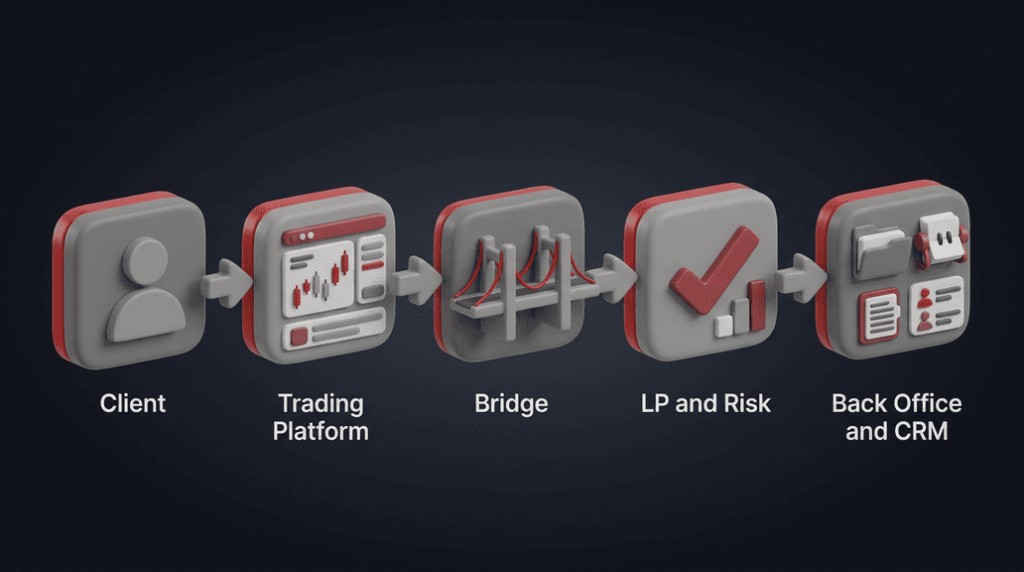
ชั้นอ่อนหนึ่งชั้นปรากฏขึ้นอย่างรวดเร็ว คุณจะได้รับคำร้องเรียนเกี่ยวกับการลื่นไถล การถอนเงินที่ติดขัด หรือบัตรที่ทีมของคุณไม่สามารถตอบได้ ซึ่งเป็นปัญหาไอทีที่ไม่เล็กน้อยเลย ระบบที่รวมเป็นหนึ่งช่วยลดการส่งต่อระหว่าง CRM การซื้อขาย และการชำระเงิน เพราะพวกเขาแชร์บัญชีและบัญชีแยกประเภทเดียวกันแล้ว
ผลิตภัณฑ์, ใบอนุญาต, และที่ที่คุณทำการตลาด
ถือว่านี่เป็นการตัดสินใจที่เชื่อมโยงกันสามอย่าง การเปลี่ยนแปลงหนึ่งอย่างในภายหลังจะทำให้ต้องทำงานใหม่กับอีกสองอย่าง
- ผลิตภัณฑ์: เครื่องมือ, เลเวอเรจ, ประเภทบัญชี, และลูกค้าเป็นใคร (ค้าปลีก, มืออาชีพ, สถาบันตามที่อนุญาต).
- ใบอนุญาตและองค์กร: ที่ที่คุณถูกควบคุมหรือจดทะเบียน และใบอนุญาตนั้นอนุญาตให้คุณเสนออะไรได้บ้าง
- รอยเท้าการตลาด: ที่ที่คุณขอให้ลูกค้าสอบถามและในภาษาใด เว็บไซต์และโฆษณาของคุณต้องอยู่ภายในสิ่งที่คุณอนุญาต
การสร้างแบรนด์ขาวเมื่อเทียบกับการสร้างจากศูนย์
แพลตฟอร์มแบบครบวงจรที่มีชื่อแบรนด์ของคุณ (B2B แบบครบวงจร): คุณได้รับใบอนุญาตผลิตภัณฑ์โบรกเกอร์ที่ทำงานได้ซึ่งรวมถึงเทอร์มินัลการซื้อขาย, CRM และสำนักงานด้านหลัง, เครื่องมือโต๊ะซื้อขาย, การเรียกเก็บเงินและการรวม PSP, กระบวนการ KYC/AML, และโมดูลพันธมิตร คุณเปลี่ยนแบรนด์, กำหนดรูปแบบเครื่องมือ, สเปรด, แผนพันธมิตร, และนโยบาย จากนั้นก็ก้าวเข้าสู่การใช้งานจริงด้วยการอัพเกรดและโครงสร้างพื้นฐานที่ดูแลโดยผู้ขาย นี่คือเส้นทางที่เร็วที่สุดสำหรับแบรนด์ใหม่ส่วนใหญ่เพราะคุณไม่ต้องจ้างทีมแพลตฟอร์มก่อนที่คุณจะมีรายได้.
สร้างจากศูนย์: เป็นไปได้จริงเฉพาะเมื่อมีองค์กรวิศวกรรมขนาดใหญ่และงบประมาณหลายปี คุณเป็นเจ้าของข้อผิดพลาดทุกข้อ การเปลี่ยนแปลงระบบปฏิบัติการมือถือทุกครั้ง กรณีขอบของ CRM ทุกกรณี และการปรับแต่งรายงานที่หน่วยงานกำกับดูแลขอให้มี
ผู้ดำเนินการที่มีความเป็นผู้ใหญ่บางครั้งเพิ่มระบบดาวเทียมรอบ ๆ แพลตฟอร์มไวท์เลเบลแบบเต็มรูปแบบ เช่น โกดังข้อมูล, BI, หรือเว็บไซต์การตลาดที่กำหนดเอง ระบบเหล่านี้จะนั่งอยู่ข้าง ๆ แพลตฟอร์มตัวกลาง; พวกเขาไม่ได้แทนที่ความจำเป็นสำหรับแหล่งข้อมูลเดียวที่เชื่อถือได้สำหรับยอดคงเหลือ, การซื้อขาย, และการคืนเงินพันธมิตรภายในผลิตภัณฑ์หลัก.
สำหรับผู้ปฏิบัติงานครั้งแรกส่วนใหญ่ การมีแบรนด์ขาวที่สมบูรณ์พร้อมการดำเนินงานที่มีระเบียบดีกว่าการใช้เครื่องมือบางส่วนหรือรหัสที่กำหนดเองที่มีการดำเนินงานที่เบาบาง
การดำเนินการและความขัดแย้งในภาษาที่เข้าใจง่าย
รูปแบบการค้าปลีกแตกต่างกันในวิธีที่คำสั่งซื้อเข้าถึงตลาด บางส่วนส่งตรงไปยัง LPs (สไตล์ตัวแทน) บางส่วนจะถูกนำมาภายในหรือทำการป้องกันความเสี่ยงภายใน (ความเสี่ยงหลัก) ป้ายและกฎเกณฑ์ขึ้นอยู่กับเขตอำนาจของคุณ。
การดำเนินการที่ดีที่สุด ความขัดแย้งทางผลประโยชน์ และสิ่งที่คุณต้องเปิดเผยกับลูกค้าไม่ได้เป็นมาตรฐานสากล พวกมันถูกกำหนดโดยกฎระเบียบท้องถิ่นและโดยวิธีที่คุณดำเนินการและสร้างรายได้จากกระแสเงิน Align เครื่องมือจัดการความเสี่ยงของคุณ ข้อตกลงกับ LP และการเปิดเผยข้อมูลลูกค้าให้สอดคล้องกับเรื่องราวเดียวกัน และตรวจสอบกับที่ปรึกษาด้านการปฏิบัติตาม
กลุ่มค่าใช้จ่าย: วางแผนด้วยช่วง ไม่ใช่หัวข้อ
ค่าใช้จ่ายแตกต่างกันไปตามประเทศ สินค้า และจำนวนที่คุณจ้างงานภายนอก ใช้ตารางนี้เป็นมุมมองการวางแผน ไม่ใช่การเสนอราคา
| ต้นทุนที่ขับเคลื่อน | สิ่งที่เคลื่อนตัวเลข |
| การตั้งค่าเทคโนโลยี | ขอบเขต (สินทรัพย์, แอพพลิเคชั่น, การรวมระบบ), ระดับผู้จำหน่าย |
| กฎหมายและนิติบุคคล | ประเทศ, โครงสร้าง, สัญญา |
| ทุนตามกฎระเบียบ | ประเภทใบอนุญาตและกฎท้องถิ่น; สำหรับหลายโมเดลค้าปลีกที่มีใบอนุญาต เส้นที่ใหญ่ที่สุด |
| สภาพคล่อง | ขั้นต่ำกับผู้ให้บริการหรือผู้รวบรวม |
| การตลาดและการจ่ายค่าคอมมิชชั่น IB | มักจะเป็นต้นทุนที่เกิดซ้ำที่ใหญ่ที่สุดหลังจากเปิดให้บริการ |
ซอฟต์แวร์มักจะไม่ใช่จุดคอขวดที่แท้จริง เงินทุน การปฏิบัติตามกฎระเบียบ และการจัดจำหน่ายมักจะเป็นเช่นนั้น
โบรกเกอร์หุ้นในปี 2026 เป็นหนึ่งในรูปแบบผลิตภัณฑ์: การชำระบัญชี, การเข้าถึงรายชื่อ, และกฎเกี่ยวกับทุนจะแตกต่างจากเส้นทางแบรนด์ขาว CFD หรือ FX ทั่วไป ไม่ว่าในกรณีใด ๆ หน่วยงาน, ทุน, และการดำเนินงานมักจะมีค่าใช้จ่ายที่น้อยกว่าค่าธรรมเนียมของเทอร์มินัลเพียงอย่างเดียว
คุณจะใช้เวลานานแค่ไหนจนกว่าคุณจะออนไลน์?
กรอบเวลาเฉพาะทางเทคโนโลยีอาจดูสั้นหากขอบเขตมีข้อจำกัด การเปิดตัวตั้งแต่ต้นจนจบจะช้ากว่า คุณยังต้องการการทำงานของหน่วยงาน การอนุมัติจากธนาคารและผู้ให้บริการชำระเงิน (PSP) การเข้าร่วมของผู้ให้บริการสภาพคล่อง (LP) และการทดสอบอย่างจริงจัง。
หลุมเวลาทั่วไป
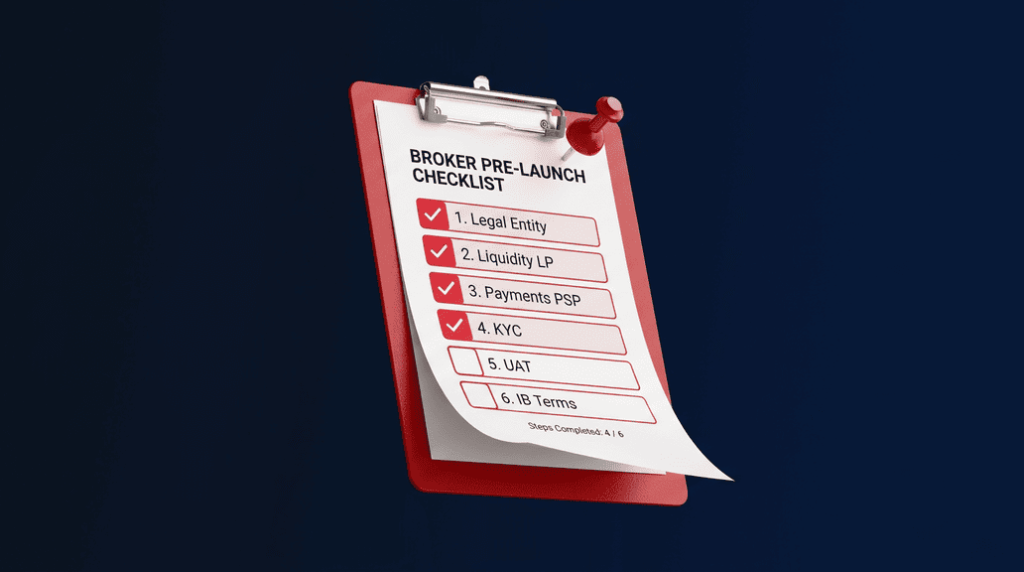
- การตั้งบริษัทและข้อตกลง
- นโยบาย KYC/AML และการจัดการกระบวนการทำงาน
- การนำเข้าเงินสดและการทดสอบการยอมรับของผู้ใช้ (UAT)
- การตรวจสอบผู้ให้บริการชำระเงิน
- สำเนาเว็บไซต์และการเปิดเผยข้อมูลที่ตรงกับใบอนุญาตของคุณ
การข้าม UAT เพื่อประหยัดเวลาหนึ่งสัปดาห์เป็นความผิดพลาดที่คลาสสิก คุณจะต้องจ่ายในช่วงการผลิต
ลำดับการเปิดตัวที่มีประสิทธิภาพ
1. กำหนดผลิตภัณฑ์. ประเภทสินทรัพย์, ขีดจำกัดการใช้ประโยชน์, พื้นที่ที่คุณจะไม่ให้บริการ, และลูกค้าเป็นใคร.
2. เลือกกลยุทธ์เขตอำนาจศาล. นี่คือการทำงานด้านกฎหมายและการค้า ไม่ใช่การเปลี่ยนซอฟต์แวร์ ตรงการตลาดให้ตรงกับสิ่งที่ใบอนุญาตของคุณอนุญาต สำหรับบริบทการคุ้มครองนักลงทุนในสหภาพยุโรป ใช้ ESMA. สำหรับมาตรฐานของบริษัทในสหราชอาณาจักร ใช้ FCA. ในสหรัฐอเมริกา เส้นทางโบรกเกอร์-ดีลเลอร์และ FX ขายปลีกเกี่ยวข้องกับหน่วยงานและกฎที่แตกต่างจากในสหภาพยุโรปหรือสหราชอาณาจักร ระบุสถานที่ของลูกค้าจริงและผลิตภัณฑ์ของคุณ จากนั้นขอคำแนะนำที่เฉพาะเจาะจงตามเขตอำนาจศาล.
3. เลือกพันธมิตรทางเทคโนโลยี. ควรเลือกผู้จำหน่ายที่จัดส่ง CRM, การจัดการ, การเรียกเก็บเงิน, และ KYC เป็นระบบที่เชื่อมต่อกันเพื่อที่คุณจะไม่ต้องเป็นชั้นการรวมระบบ ดูประวัติการทำงาน, คุณภาพบนมือถือ, ความลึกของสำนักงานด้านหลัง, เครื่องมือความเสี่ยง, ความเร็วในการรวมระบบ, และการสนับสนุนเหตุการณ์ การสาธิตจะแสดงอินเทอร์เฟซ; คู่มือการดำเนินงานที่มีการบันทึก, การโทรอ้างอิง, และประวัติเหตุการณ์จะแสดงให้เห็นว่าระบบทำงานอย่างไรภายใต้ความเครียด.
4. ออกแบบสภาพคล่องและความเสี่ยง. ตัดสินใจว่าคุณต้องการจัดการกับการไหลอย่างไร ก่อนที่ปริมาณจะมาถึง การกำหนดค่าที่ผิดเล็กน้อยที่นี่จะปรากฏขึ้นในภายหลังในรูปแบบของการสนับสนุนที่รุนแรงและการเซอร์ไพรส์ P&L.
5. เชื่อมต่อ CRM และตรรกะ IB ตั้งแต่เนิ่นๆ. หากคุณมาจากพันธมิตร คุณก็จะทราบดีว่าการให้เครดิตและความถูกต้องในการจ่ายเงินมีความสำคัญ ล็อก CPA vs RevShare (หรือแบบผสม) ก่อนที่ปริมาณของพันธมิตรจะถึง.
6. ทดสอบ เหมือนผู้ใช้ จากนั้นเหมือนฝ่ายปฏิบัติการ การฝาก การถอน การเรียกหลักประกัน ขั้นตอนการหยุดทำงาน การเพิ่มระดับการสนับสนุน.
7. เปิดตัวแบบนุ่มนวล. การเข้าชมเล็กน้อย, โหลดการสนับสนุนจริง, แก้ไขช่องว่าง, แล้วขยาย.
การแปลภาษาและการวางตำแหน่ง
โบรกเกอร์ที่ปรับให้เข้ากับท้องถิ่น มักมีประสิทธิภาพดีกว่าการเข้าชมทั่วโลกทั่วไปเมื่ออุโมงค์และผลงานสร้างสรรค์ตรงกับกลุ่มเฉพาะ เชื่อมโยงสิ่งนี้กลับไปยังขั้นตอนที่ 1 (สินค้า) และขั้นตอนที่ 2 (ที่ที่คุณอาจขอ).
กรณีการใช้งาน: ซอฟต์แวร์เดียวกัน, งานที่แตกต่างกัน
| กรณีการใช้งาน | สิ่งที่คุณทำให้เหมาะสม | สิ่งที่จะแตกหากคุณเพิกเฉย |
| แบรนด์ FX/CFD ขายปลีก | การเริ่มต้นที่รวดเร็ว, มือถือที่เสถียร, ความเสี่ยงที่ชัดเจน | คิวการถอนเงิน, ข้อร้องเรียนเกี่ยวกับสเปรด |
| การเติบโตที่มี IB เป็นหลัก | พอร์ทัลพันธมิตร, ความถูกต้องของเงินคืน, เส้นทางการพิพาท | การเลิกจ้างพันธมิตร, ข้อพิพาทเกี่ยวกับเงินคืน, การระบุที่ผิดพลาด |
| การขยายตัวหลายภูมิภาค | พื้นที่, วิธีการชำระเงิน, ความแตกต่างของกฎ | การตลาดที่เกินใบอนุญาต |
| ทีมสตาร์ทอัพที่ประหยัด | ผู้ขายที่น้อยลง, SLA การสนับสนุนที่แข็งแกร่ง | พนักงานจมอยู่ในเครื่องมือ |
ตัวอย่าง: ภาพรวมการดำเนินงานสัปดาห์ที่หนึ่ง
จินตนาการถึงทีมเล็กๆ ทีมหนึ่ง: หัวหน้าฝ่ายปฏิบัติการหนึ่งคน, ตัวแทนสนับสนุนสองคน, นักการตลาดหนึ่งคน.
วันจันทร์: ลงทะเบียนห้าสิบคน ยี่สิบคนผ่าน KYC ในวันเดียวกัน คุณได้เรียนรู้ว่าผู้ให้บริการ KYC ของคุณช้าในประเภทเอกสารหนึ่ง.
วันพุธ: การเปลี่ยนแปลงความผันผวนอย่างรวดเร็ว ราคาขยายกว้างขึ้น การสนับสนุนได้รับบัตรสิบใบ คุณพบว่ามาโครของคุณล้าสมัยแล้ว
วันศุกร์: IB สามคนถามว่าทำไมการคืนเงินถึงไม่ตรงกับแดชบอร์ดของพวกเขา คุณติดตามความล่าช้าในการรายงาน
สิ่งเหล่านั้นไม่ใช่ทฤษฎี นี่คือเหตุผลว่าทำไมความลึกในสำนักงานด้านหลังและการรายงาน IB ที่ชัดเจนจึงดีกว่าการมีแค่หน้าแรกที่ดูดี
ในระดับใหญ่ Master IB เศรษฐศาสตร์อาจทำให้รายได้รั่วไหลได้หากระดับและการคืนเงินไม่ชัดเจน
รูปแบบทั่วไปในแต่ละการดำเนินการ
- ซอฟต์แวร์ก่อนภูมิศาสตร์และผลิตภัณฑ์: คุณทำเครื่องมือใหม่ ใช้ประโยชน์ และการชำระเงินกลางโปรเจกต์.
- การปฏิบัติตามถูกมองว่าเป็นเอกสารเท่านั้น: กฎของแพลตฟอร์มต้องตรงกับสิ่งที่สัญญาไว้ในข้อกำหนด.
- การจัดการการถอนที่อ่อนแอ: ความเชื่อมั่นตายที่นี่ กระบวนการและการจัดหางานมีความสำคัญไม่แพ้กับการกระจาย
- การพัฒนาที่ปรับแต่งได้ก่อนที่คุณจะตรวจสอบการกระจาย: คุณใช้จ่ายงบประมาณในกรณีขอบขณะที่ CRM, การจัดการ และการชำระเงินสามารถทำงานบนแพลตฟอร์มไวท์เลเบลแบบฟูลสแตกได้แล้ว
- การทดสอบสภาพคล่องเฉพาะในตลาดที่เงียบสงบ: ทดสอบหน้าต่างข่าวและเซสชันที่มีความผันผวน.
- การจ่ายเงินให้พันธมิตรโดยไม่มีการตรวจสอบ: ความสัมพันธ์จะขาดเมื่อจำนวนไม่ตรงกัน.
ติดตาม การเลิกใช้งาน ควบคู่ไปกับการลงทะเบียน หรือสื่อที่ต้องชำระเงินจะทำให้การรักษาลูกค้าอ่อนแอลง
ชิ้นส่วนพิเศษที่คู่แข่งมักจะข้ามไป
การวิเคราะห์พื้นฐานที่คุณจะใช้จริง: CAC, การแปลงเงินฝาก, การเปิดใช้งานไปยังการซื้อขายครั้งแรก, การรักษากลุ่ม. ปริมาณรายวันเพียงอย่างเดียวหลอกคุณ.
บทบาทในเหตุการณ์: ใครจะทำการย้อนกลับการปล่อยที่ไม่ดี? ใครโทรหา LPs หากการตั้งราคาแข็งตัว? เขียนมันเมื่อทุกอย่างสงบ.
ออกจากการล็อกของผู้ขาย: คุณสามารถส่งออกบันทึกของลูกค้า ประวัติการซื้อขาย และงบการเงินได้อย่างสะอาดหรือไม่? ถ้าไม่ ให้รู้ถึงค่าใช้จ่ายในการเปลี่ยนแปลง.
มาตรฐานความปลอดภัย: การยืนยันตัวตนแบบสองปัจจัยสำหรับพนักงาน, การเข้าถึงตามบทบาท, และสถานะความปลอดภัยของผู้ขายเป็นความคาดหวังที่ปกติในปัจจุบัน.
สำหรับมุมมองระดับสูงเกี่ยวกับวิธีที่ผู้กำกับดูแลพูดคุยเกี่ยวกับตลาดและตัวกลาง ดูเอกสารจาก IOSCO.
การตรวจสอบความละเอียดในสแต็คการเป็นนายหน้าระหว่างธุรกิจ
- เผยแพร่ SLA สำหรับเวลาทำงานและระดับการสนับสนุน พร้อมเส้นทางการเพิ่มระดับจริงเมื่อเกิดเหตุการณ์เกิน L1.
- การฟื้นฟูหลังภัยพิบัติและการดำเนินธุรกิจต่อเนื่อง: เป้าหมาย RTO/RPO, การฝึกซ้อมการเปลี่ยนผ่าน, และใครเป็นผู้ดูแลการสื่อสารกับลูกค้า.
- หลักฐานความปลอดภัย: การทดสอบการเจาะระบบ, รายงาน SOC หรือรายงานที่เทียบเท่า, และการควบคุมการเข้าถึงของพนักงาน (2FA, สิทธิ์น้อยที่สุด).
- ความเสถียรของ API: นโยบายการเวอร์ชัน, ความเท่าเทียมของ Sandbox กับการผลิต, และการแจ้งเตือนการเปลี่ยนแปลงสำหรับการอัปเดตที่ทำลายความเข้ากันได้.
- การพกพาข้อมูล: รูปแบบการส่งออกสำหรับลูกค้า, การซื้อขาย, และรายการแถบถ้าคุณเปลี่ยนผู้ขาย.
บันทึกภาคสนาม: การสนับสนุนหลังการเปิดตัว (Ops)
ในการสนับสนุนหลังการเปิดตัว เหตุการณ์ในช่วงแรกส่วนใหญ่มีสาเหตุมาจากกรณีขอบการชำระเงินและการสื่อสารเกี่ยวกับมาร์จิ้น ไม่ใช่ข้อผิดพลาดของกราฟ ทีมที่ฝึกซ้อมการฝากเงินที่ล้มเหลว การถอนเงินที่รอดำเนินการ และลำดับการเรียกมาร์จิ้นในการทดสอบการยอมรับของผู้ใช้ จะลดปริมาณตั๋วได้มากในเดือนแรก หากคุณทดสอบเฉพาะเส้นทางที่ราบรื่น คุณกำลังวางแผนสำหรับการสาธิต ไม่ใช่ธุรกิจ
บันทึกภาคสนาม: โปรแกรม IB (พันธมิตร)
ในโปรแกรม IB พันธมิตรยอมรับแผนฟีเจอร์ที่ช้าได้มากกว่าที่พวกเขายอมรับส่วนลดที่ไม่โปร่งใส หากหมายเลข sub-IB ไม่เชื่อมโยงกับหมายเลขในสำนักงานหลังภายในกรอบเวลาที่ชัดเจน คุณจะใช้เวลาของผู้บริหารไปกับการแก้ไขปัญหาของพันธมิตรแทนที่จะเป็นการเติบโต สร้างความโปร่งใสในการปรับยอดก่อนที่คุณจะขยายการใช้จ่ายของพันธมิตร
โบรกเกอร์ที่แนะนำ introducing broker ไม่เหมือนกับพันธมิตร; การควบคุมและสัญญาจะแตกต่างกัน
KYC และรายชื่อผู้ขายที่คัดเลือก
โบรกเกอร์มักเลือกเครื่องมือ KYC ตามความเหมาะสมของเขตอำนาจ, การสนับสนุนภาษา, และคุณภาพของ API อย่าให้ KYC เป็นเพียงการตรวจสอบในสัปดาห์เปิดตัว เปรียบเทียบ ผู้ให้บริการ KYC ชั้นนำสำหรับโบรกเกอร์ในปี 2026 ในขณะที่คุณยังมีพื้นที่ในการทดสอบการไหล.
ความคิดสุดท้าย
การเปิดตัวโบรกเกอร์นั้นเกี่ยวกับการจัดตั้งระบบที่สอดคล้องกันมากกว่าการรวมผู้ขายสิบราย: เทอร์มินัลที่มีแบรนด์, CRM และสำนักงานหลังบ้าน, การซื้อขายและสภาพคล่อง, การชำระเงิน, และ KYC ภายใต้แผนทางกฎหมายและการค้าอย่างชัดเจน เมื่อแกนหลักนั้นถูกบูรณาการแล้ว คุณจะใช้พลังงานของคุณไปที่ความไว้วางใจ, คุณภาพการดำเนินการ, เศรษฐศาสตร์ของพันธมิตร, และการรักษาลูกค้า – ไม่ใช่การเชื่อมต่อมิดเดิลแวร์.

