
A decentralized method of trading securities not listed on official exchanges, over-the-counter (OTC) trading provides a flexible substitute for the conventional exchange-based market system. OTC trading happens via a network of broker-dealers that enable transactions straight between parties, unlike the tightly controlled settings of the New York Stock Exchange or Nasdaq. Often the sole place to trade certain assets, this system lets you trade different securities like small business stocks, bonds, derivatives, foreign currencies, and even cryptocurrencies. Choosing the right trading platform and understanding how OTC access is provided are important steps for investors looking at this wider range of financial assets.
Quick Summary of OTC Trading
The acronym OTC stands for ”Over the Counter” and means ”no longer being handled at the centralised markets such as New York Stock Exchange or Nasdaq.” Instead, OTC trades occur within a network of broker-dealers which negotiate prices on an individual basis.
Here is a summary of some of the basic facts to know about OTC Trading:
What OTC Trading Is
A System of trading securities by brokers-dealers of all kinds for securities not trading on listed formal exchanges.
What to Trade OTC?
Micro-Cap Stocks, Small Caps, Bonds & Fixed Income, ADR’s – American Depository Receipts, Customised Derivatives, Forex, Cryptocurrency, etc. For digital assets, OTC trading often complements regular cryptocurrency trading on exchanges.
How OTC Trading Works
All trades occur via electronic systems that are NOT placed on Public-order books but rather, between Broker-Dealer direct communications .
Main Tiers of OTC Markets
- OTCQX is the most respected reporting standard,
- OTCQB is for venture companies with minimum reporting,
- Pink Open Market has minimal/no reporting requirements.
Benefits
- Access to niche or early-stage companies,
- Opportunity to invest in foreign issuers,
- Flexible and customized financing options.
Risks
- Lack of Transparency,
- Extremely High Volatility,
- Liquidity Issues,
- Counter-Execution and Transaction downside, which makes robust risk management practices essential.
You may also like

Demetris Makrides
October 1, 2025
Understanding OTC Markets and Securities
Unlike official and widely recognized exchange networks, over-the-counter markets function without a central trading floor. Through a broker-dealer network, transactions are brokered straight between parties in OTC markets using electronic technologies and phone calls to enable trading. This decentralized structure enables the trading of a wide range of securities that would not be available in more tightly controlled and regulated markets.
Key Differences: OTC Markets vs. Stock Exchanges
OTC markets and traditional exchanges are very different from each other and how they operate, but both markets provide a means of trading financial securities. Because of this difference, investors need to understand the advantages and disadvantages of each market when evaluating the risks, transparency, and liquidity of their transactions before they execute any trades.
| Feature | OTC Markets | Stock Exchanges |
| Structure | Broker-dealers’ decentralized network | Centralized market with an order book |
| Regulation | Less compliance requirements | Strict reporting standards |
| Price Transparency | Lower, prices are negotiated privately | High, real-time public quotes |
| Liquidity | Usually low | Generally high |
| Issuer Requirements | Minimal to moderate | Extensive |
| Trade Execution | Broker-mediated | Automated matching via exchange systems |
| Risk Level | Higher due to volatility | Lower due to transparency |
| Issuers | Early-stage companies, foreign firms, delisted entities | Well-established public companies |
Both OTC markets and traditional exchanges allow investors to buy and sell shares of companies’ stock, bonds, options, etc. However, the way each market operates is very different. Investors must understand this difference in order to make informed decisions regarding the risks associated with each market, the transparency and liquidity offered by each market before making their investment decisions.
Why Companies Choose OTC
Companies don’t accidentally choose to list on an OTC Market; oftentimes, they use OTC as a strategic alternative to issuers that may not wish or be able to meet the listed requirements of formal stock exchanges. While some companies are in their early growth stages, others are established multi-national corporations seeking American capital while not wanting to go through the full exchange listing process.
- Lower compliance & listing costs – OTC facilitates lower regulatory compliance, auditing, and administration costs, compared to major stock exchanges, making them an attractive option for small-cap and startup companies that want to access investors at lower costs.
- Ability to reach U.S. Investors Represented by ADR – International Issuers frequently conduct their trading activity through an ADR program on the OTC market to increase visibility and liquidity to U.S. investors without complying with the governance mandates of a stock exchange.
- Flexibility for Businesses in Early Development or in Niche Markets – Companies with narrow operational classifications, in their initial development cycle, or with little or no financial history may choose to participate in an OTC market where regulatory and reporting requirements are less stringent.
- Continued Trading Following Delisting – Companies that have been delisted from major stock exchanges due to financial or compliance issues may still trade OTC and provide continued liquidity for their investors while reorganizing.
Types of Securities Traded OTC
- Small and Micro-Cap Stocks: Many of the companies trading on the OTC markets are tiny, often called micro-cap stocks. These businesses might operate in particular sectors or be in the early phases of growth. Many times, they select OTC trading because they either want to avoid the high expenses connected with such listings or they cannot satisfy the financial or legal criteria for listing on bigger exchanges.
- American Depositary Receipts (ADRs): A large amount of OTC trading is represented by American Depositary Receipts (ADRs), which enable U.S. investors to buy equities in international corporations without the difficulties of handling foreign securities rules or currency conversions. These securities provide simpler access to overseas stock markets and are critical for diversifying investing strategies.
- Derivatives:In contrast to standardized derivatives sold on exchanges, OTC markets are better suited for derivatives that are tailored to the individual requirements of the traders. Swaps, forwards, and exotic options are some examples. OTC derivatives are designed to let parties hedge risks or speculate on future price fluctuations of underlying assets such as commodities, currencies, or stocks.
- Forex and Cryptocurrencies: TThe Forex market is virtually entirely over the counter, with currencies exchanged directly between parties around the clock. This market is noted for its high liquidity and works on a worldwide basis. Similarly, cryptocurrencies, which have grown in popularity and acceptability, are exchanged on a variety of OTC platforms, giving traders and investors access to digital assets without the need of established exchanges and complementing exchange-based crypto trading for beginners.
The Pros and Cons of Trading OTC
Traders have access to more non-traditional stocks through OTC Markets than through traditional exchanges; however, investors should carefully consider the risks associated with OTC Markets. Below is an overview of the pros and cons.
Pros
- Access to Early-stage and Niche Opportunities
Many small and emerging companies are currently traded on OTC markets; some of these companies may potentially become large-scale enterprises and, as a result, provide investors with early access to potential high-growth stock opportunities.
- Ability to Easily Trade International Securities
OTC Markets allow investors to diversify their portfolios globally through ADRs and international issuers without having the added complexities of navigating the international marketplace, including foreign currency exchange.
- Flexibility of Instruments and Customized Contracts
Investors can use OTC derivatives (e.g., swaps, forwards, bespoke options) to create unique tailored hedging/investment strategies that are not available through standardized exchanges.
- Lower Barriers to Entry for Issuers
Companies that are not heavily capitalized are able to gain access to investors, thereby broadening the range of opportunities available to investors and creating a greater range of options for potential investors.
Cons
- Lack of Transparency and Limited Financial Disclosure
The majority of OTC issuers provide very little information to investors on their financials; as a result, it is difficult to accurately assess the performance of these businesses, increasing the risk of misinformation.
- Increased Volatility
Due to the lower volume of trades and fewer participants, the likelihood of price swings, and the speed at which prices can move in either direction, is much higher on OTC Markets than on traditional exchanges.
- Limited Liquidity
Wide bid-ask spreads and thin trading activity can make it difficult to enter or exit positions without affecting price.
- Increased Risk of Fraud and Manipulation
Without sufficient regulations, markets are at an increased risk of pump-and-dump schemes, false promotion of stocks, and fraudulent issuers.
- Risks Associated with Executing Trades and Counterparty
Since trades are negotiated between broker-dealers and executed, instead of automatically matched through the exchange, there is a greater chance that your trade will not be executed with the same speed or at the same price as the market order.
You may also like

Demetris Makrides
April 17, 2025
OTC Market Tiers Explained
The OTC market consists of a group of stocks that trades outside of the traditional exchange system. As such, the marketplace has very few regulations. Nevertheless, traders still need to do their research when trading OTC stocks. In understanding the nuances between the different tiers of the OTC, traders are able to understand the associated levels of the securities, regulatory compliance and investor risk.
1. OTCQX Tier is considered the “elite” tier
Purpose: To provide trading access to large, public companies who have established themselves as reputable.
Requirements:
- Must have audited financials
- Must provide on-going disclosure
- Must adhere to strict corporate governance standards
- Must have no penny stocks, shells or bankruptcy companies
This tier provides the safest and most transparent access to OTC securities. The majority of OTCQX companies are large and stable international firms. It also includes many reputable Small-Cap companies.
2. The OTCQB Tier is generally known as the “Venture Market”
Purpose: To provide access to smaller, start-up or growth-oriented companies.
Requirements:
- Provides an “Annual Verification and Certification” to the investor
- Reports must meet a predetermined standard (Standardized Reporting).
- Have to pass the “Minimum Bid Price Test”
- Not required (but encouraged) to have audited financials.
As viewed by the investor, this tier provides more transparency than the Pink Sheets, but carries a higher risk than the OTCQX tier. Many of the companies in this tier are in their start-up phase, or many are small-cap public companies.
3. The Pink Open Market Tier is the most speculative tier
Purpose: Provides access to the highest risk securities and the widest number of opportunities to investors
Requirements:
- No minimum standards for financial statements required.
- Report Requirements can vary from: (i) a total lack of information or company updates about current conditions; (ii) some limited type of factual information, or (iii) investors gain full disclosure regarding the company and all their financial statements.
As viewed by the investor, the Pink market represents the highest risk and requires much more due diligence and research on behalf of the investor than the OTCQX or OTCQB tiers.
How OTC Markets Function
Functioning OTC markets mostly depends on broker-dealers that provide the availability and liquidity of assets. They assist in terms of negotiations and link buyers with sellers. Although this arrangement might sometimes result in a smaller transparency than centralized exchanges, broker-dealers are very essential in ensuring that deals are conducted fairly and effectively.
Securities are often traded in OTC markets on systems that classify businesses depending on the degree of information disclosure. Each of these platforms—OTCQX, OTCQB, and Pink Open Market—offers distinct degrees of regulatory control that influences the risk profiles of the securities traded there by means of varied criteria and regulations.
The Mechanisms of OTC Trading
Due mostly to its distributed character, over-the-counter trading differs from conventional exchange-based trading by means of a unique set of procedures. Here is a closer view of these mechanisms’ operation:
Role of Broker-Dealers
Broker-dealers are very important in OTC trading. They serve as middlemen helping buyers and sellers conduct transactions. Transactions in the OTC market are conducted privately, unlike exchanges with a public order book, which could include more direct contact and negotiation between participants. Broker-dealers assist in negotiating these transactions and give price transparency and market information that is not generally accessible in the OTC market. They may also provide post-trade services like settlement and clearing, which adds an additional layer of service to what exchanges normally automate.
Decentralized Trading Platforms
Platforms such as the OTC Markets Group provide critical infrastructure for arranging the trading of OTC securities. They divide firms into three markets: OTCQX, OTCQB, and Pink Open Market, depending on a variety of factors such as financial standards, corporate governance, and transparency.
- OTCQX: Designed for established, investor-oriented businesses that satisfy strong financial criteria and are dedicated to provide open trading and information disclosure, OTCQX is the most advanced of the three markets.
- OTCQB: Entrepreneurial and development-stage businesses who cannot yet qualify for OTCQX but have shown their will to provide an open trading environment with current financial reporting.
- Pink Open Market: This market allows trading for a broad range of businesses, from those with minimal levels of compliance and transparency to those subject to regulatory reporting, allowing for much more speculative trading.
Transparency and Information Flow
The many OTC marketplaces have somewhat diverse degrees of regulatory control and openness. Compared to lesser levels, companies trading on the OTCQX often show the maximum degree of disclosure and regulatory control, therefore offering investors more transparency and fewer risk. The quantity of accessible information may drop as the tiers decrease, therefore raising potential risks because of reduced transparency. Based on their risk tolerance and investing approach, this framework allows investors evaluate the risk connected with various assets and base their selections on that.
Market Accessibility
OTC markets may be accessed by broker-dealers that have access to these trading networks. Investors often get access to OTC securities via their brokers’ platforms, which vary greatly in terms of technical complexity and usability. Some brokers provide sophisticated web platforms that allow for electronic trading and real-time data, while others operate more conventionally via telephone or other non-electronic channels.
How to Trade OTC Securities
Due mostly to its distributed and less regulated character, trading over-the-counter securities entails a few important processes different from conventional exchange trading. The important steps are discussed here in more detail:
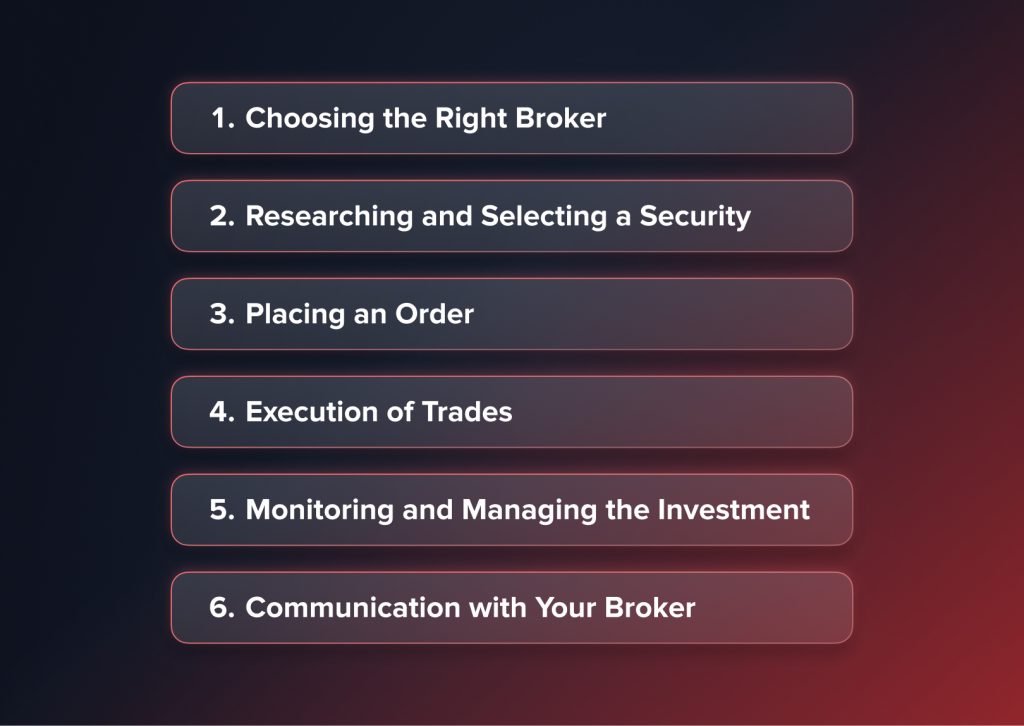
Choosing the Right Broker
Choosing a reliable broker with strong access to the OTC markets comes first and most importantly in trading OTC securities. OTC trading’s less regulated environment calls for working with brokers that not only have strong connections within the OTC network but also maintain high standards of dependability and compliance. A reputable broker should be open about its operations, fees, and how it processes orders and transactions.
Researching and Selecting a Security
The choice of securities to trade comes second after a trustworthy broker is in place. This undertaking requires extensive research to grasp the many elements influencing the performance of the security. Investors should take into account any sector-specific risks, the financial situation and operational performance of the issuing company and the market tier of security. Proper precaution is important as information openness varies significantly amongst securities; some may carry more risks than others.
Placing an Order
Investors will interact with their broker to make an order with a certain investment in mind. This exchange should include in great detail all aspects of the deal, including the price range, the quantity of shares, and the ordering time. Understanding and defining the terms for the order may assist in managing risks connected with price changes and order execution in OTC securities because of their possible reduced liquidity and increased volatility.
Execution of Trades
The broker is in charge of locating a counterparty to finish the deal after an order is placed. Navigating the broker-dealer network, this search finds and matches buy and sell orders. The liquidity of the security and current state of the market will mostly determine the length and success of this procedure. Sometimes, particularly with less liquid stocks, completing a deal might take more time or call for changing the order parameters.
Monitoring and Managing the Investment
Investors have to keep checking their assets post-trade and keep informed about any changes concerning the securities or the issuing firm. OTC securities might need more active management and preparedness to make quick decisions based on fresh information given their potential for fast swings in value.
Communication with Your Broker
Keeping open lines of contact with your broker is very vital throughout the process. Investors should be sure their broker will be dedicated to provide updates and analysis on the situation of their orders and general state of the market. Navigating the OTC terrain successfully depends on this basic interaction.
Risks and Considerations
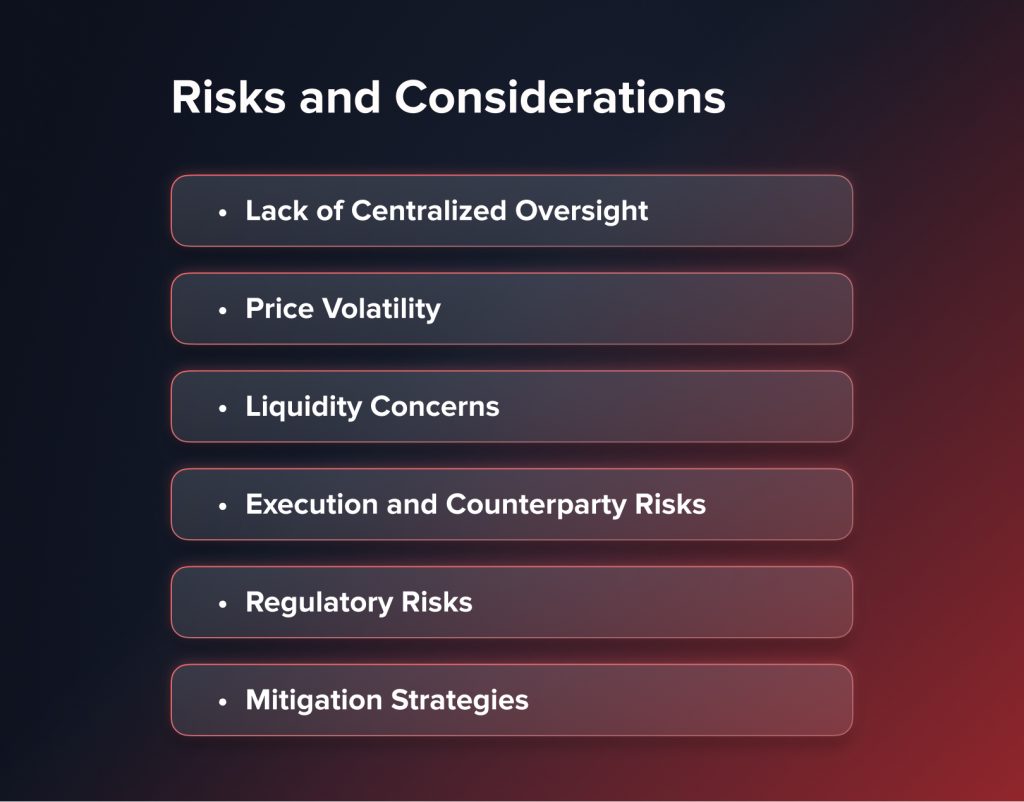
While OTC trading offers a unique variety of investing possibilities, it also brings a set of intrinsic dangers different from those found on regulated markets. Investors trying to efficiently negotiate this complicated market must first understand the risks involved.
Lack of Centralized Oversight
One of the most significant concerns connected with OTC trading is the lack of centralized monitoring. Unlike conventional exchanges, which have a central authority that monitors and supervises all transactions, OTC markets are decentralized and generally self-regulated. This may result in severe price volatility and more noticeable inconsistencies in information about stocks. To reduce the risks associated with less transparency, investors must exercise caution and perform rigorous due diligence.
Price Volatility
Because these markets are decentralized, securities sold over-counter might show more volatility. Little market changes may disproportionately impact the price of securities without the stabilizing effect of a big, controlled exchange. This volatility may be increased by low trading volumes and fewer market participants, which are frequent in OTC trading.
Liquidity Concerns
Liquidity is also another major issue in OTC marketplaces. Reduced trading volumes of certain OTC securities might cause wider disparities between the bidding price ready to be paid by buyers and the asking price established by sellers. Under such circumstances, investors may find it difficult to carry out big orders without feeling significant price effects. Furthermore, quickly selling a position at a fair price may be challenging, especially during market downturns or times of financial crisis.
Execution and Counterparty Risks
Investors in OTC trading also suffer execution risks. Trade events do not take place on a centralized exchange, hence there is no assurance that an order will be carried out at the intended price or time. Coupled with this is counterparty risk, in which case the other transaction party could default on their commitments either by failing to pay or deliver securities as promised.
Regulatory Risks
Although certain OTC markets are under oversight, overall the degree of control is less strict than that of regulated exchanges. Because of poor financial disclosures or false information from issuers, this might expose investors to possible fraud or unethical behavior. Verifying the validity and legality of the securities and their issuers usually rests on the investor, who must therefore have a proactive attitude to risk management.
Mitigation Strategies
Investors should consider numerous approaches to reduce these risks:
- Due Diligence: Due diligence means thorough investigation of the securities and the business issuing them. This includes looking at press announcements, financial statements, market analysis, and any pertinent outside research.
- Experienced Brokers: Working with trustworthy and experienced brokers who understand the subtleties of the OTC markets and can provide insightful analysis and guidance to help you.
- Diversification: Spread your assets across many securities and industries to lower possible losses connected to any one investment.
- Risk Management Tools: Using stop-loss orders and position size helps you control investment risk and reduce possible losses.
Is OTC Trading Safe?
Although OTC markets are legal and regulated, however, the protection offered to investors through OTC markets is not the same as that provided through the more highly regulated exchanges. The safety of OTC trading relies heavily on the security being traded, the market tier used to trade the security, and the investor’s overall trading experience.
Regulated with Limited Transparency
OTC trading is regulated by the U.S. Securities and Exchange Commission (SEC) and FINRA, but there are fewer requirements for disclosure with regard to many of the OTC markets. This lack of required disclosure can create significant information gaps, which can make it difficult to evaluate the security’s performance.
Liquidity and Volatility Create More Risk
Many OTC securities are generally riskier because of the lack of liquidity; greater bid–ask spreads; and unpredictable price changes. Due to these characteristics, it may be challenging for investors to execute a buy/sell order at a price that they intended.
Safety Depends on Tier Level
The OTCQX tier of the OTC marketplace is considered the safest. All companies that are listed on the OTCQX must meet minimum financial requirements and file audited financial statements. The OTCQB tier of the OTC market offers moderate risk because all companies on this tier must follow standard reporting requirements. The Pink Sheets are the riskiest tier of the OTC marketplace due to the limited disclosures from the companies.
Safe for Some Experienced Investors, High Risk for Others
OTC trading may be appropriate for experienced investors who understand the limitations of the OTC marketplace; however, it is not necessarily suited for beginning investors or conservative investors due to its increased risk.
Regulatory Environment
OTC trading is not without regulatory control even if it operates outside the conventional exchange structure. Monitoring the activities in these markets is mostly dependent on regulatory authorities including the Securities and Exchange Commission (SEC) in the United States. They impose certain reporting rules and standards that businesses have to follow, therefore guaranteeing a degree of openness and offering some defense against dishonest behavior.
Still, the legal environment for OTC trading is usually less strict than that controlling big stock markets. Investors should do careful research on their own as differences in the availability and dependability of information might affect them.
Conclusion
By obtaining a variety of assets not offered on regular markets, OTC trading presents investors with unique opportunities to diversify their portfolios. But the complexity and dangers of OTC trading need a meticulous strategy and extensive knowledge. Investors may efficiently negotiate the OTC markets and seize the chances presented by working with reliable brokers, doing thorough research, and maintaining a careful mentality.

