
What is the Islamic Way of Trading?
In Islam, all activities must adhere to Sharia law. A few core principles govern Islamic finance and determine whether financial activities and contracts are permissible (halal) or prohibited (haram) according to Sharia law. The most relevant principles for FX trading are:
Prohibition of Riba
Riba refers to any excess compensation without due consideration. It is commonly translated as “usury” or interest charged on loans. Islam views money as a medium of exchange rather than a commodity that generates return. Charging interest is seen as earning a profit without undertaking any business risk.
Focus on Asset-backed Transactions
All contracts must be supported by real economic activities involving goods and services. Speculation or contracts based solely on the exchange of money are not condoned. Financial dealing must result in the creation of assets, goods, or services.
Profit and Loss Sharing
Investment activities like business partnerships are allowed under Islamic law as long as all parties voluntarily agree to share risks and rewards. Fixed or guaranteed returns are prohibited since they amount to interest charging.
Avoidance of Gharar
A core value of Islamic finance is avoiding gharar, which describes ambiguity, uncertainty, or excessive risk that could lead to unfair outcomes or disputes. Transactions must have clearly defined terms so that all participants understand the conditions and potential results.
These guiding principles shape Islamic finance and require alternate structures compared to conventional interest-based models. Core elements like the prohibition of excess interest charges make standard trading approaches problematic. Islamic alternatives aim to comply with these rules.
You may also like

Vitaly Makarenko
August 21, 2024
Explaining Prohibition on Riba
Islam prohibits the payment or collection of interest, known as riba, for several reasons. Firstly, it recognizes money as solely a medium of exchange and not a commodity that can generate profit itself without being used productively in real economic activity like trade.
Charging interest essentially amounts to making money from money, which Islam says is haraam or forbidden. It creates an unequal relationship where the lender extracts profit without undertaking any business risk.
Furthermore, Islam aims to promote ethical practices where all parties in a transaction contribute meaningful work and share fairly in risks and rewards. Interest undermines this by guaranteeing returns to inactive capital regardless of the outcome. It can also lead to oppressive situations where the needy are exploited.
Concept of Profit and Loss Sharing
To comply with these principles, Islam encourages risk-reward-sharing models like mudharabah (silent partnership) and musharakah (active partnership) as alternatives to interest-based lending. Partners commit capital and work towards a common business goal, fairly dividing any profits based on their contribution.
Losses are also shared proportional to each partner’s share rather than one party alone bearing it as in debt contracts. This fosters an equitable environment and mutual concern between all involved in financial dealings.
Such profit and loss sharing (PLS) is a core part of Islamically permissible transactions. As long as all terms are clearly defined upfront, it satisfies the rules of mutual cooperation and invalidates arguments of predetermined returns amounting to interest charges.
What Is The Difference Between an Islamic Account and a Standard Account?
Standard Forex Accounts
In a standard forex trading account, traders are subject to financing charges called swaps or rollovers anytime they hold a position overnight. This reflects the interest rate differential between the two currencies in the trade.
For example, if someone goes long on the EUR/USD pair, they are borrowing euros and lending dollars. Overnight, they receive interest on euros according to the European Central Bank rate but must pay interest on the dollars based on the Federal Reserve rate.
The net interest paid or received is the daily swap amount posted to the trader’s account. If euros have a higher rate than dollars, then the EUR/USD trade would generate a positive swap. Traders benefit from receiving the financing credit.
Swaps are applied by forex brokers once a day at predetermined rollover times, usually 5 pm — 6 pm EST. The amount depends on the size of the position held and the interest rate spread. Both profits and losses are affected by this interest adjustment.
Islamic Accounts Eliminate Swaps
Since forex swaps are based on the underlying interest rates charged by central banks, they introduce an element of riba into trading and violate Islamic principles. Merely holding open currency positions overnight to receive or pay swaps becomes impermissible.
This makes standard forex accounts non-compliant with Sharia and renders trading activities conducted through them haram or forbidden from a religious perspective. It was this issue that spurred the introduction of Islamic trading accounts.
To resolve the riba prohibition, Islamic trading accounts function without any interest component. Brokers offer swap-free account models that do not charge or credit daily swaps to trades.
Instead of variable financing, some alternatives used comply with Sharia law such as:
- Applying a small fixed commission on each trade rather than floating swaps tied to rates
- Widening forex spreads to offset lost swap revenue
- Imposing limits before commissions instead of rolling charges
- Charging inactivity fees if no trades are made within 30-60 days
This removes riba and makes trading operations halal or permissible for Muslims adhering to their faith’s banking guidelines.
Impact on Different Trader Types
Removal of swaps mainly benefits position traders with outlooks measured in weeks rather than days. They avoid sizable financing fees accumulating from rolling trades. However, wider forex spreads dampen scalpers profiting on small intraday moves. High transaction costs eat into viability.
Swing traders somewhere between these extremes are moderately impacted. Neither paying extended swaps nor facing overly tight intermediary rates. Overall, Islamic accounts accommodate different styles but generally suit position traders best relative to standard accounts. Spreads necessitate somewhat larger trades.
Limitations of Some Currencies/Markets
Brokers may also limit less liquid emerging market pairs on Islamic accounts due to their typically higher domestic interest rates. This prevents racking up negative swaps which cannot be offset without introducing impermissible interest components.
Crypto asset trading faces interpretation questions under Sharia as they resemble commodities more than currencies as per Islamic directives. Stocks require vetting individual firms for halal business activities.
While diverse markets remain accessible and subject to brokers, some assets present intrinsic compliance difficulties that Islamic account holders must consider. Core currency pairs provide the least interpretive challenges.
The Halal Stock Screening Process
While Forex focuses on currency as a medium of exchange, many Islamic account holders also trade equities. To ensure a stock is Halal, it must pass two levels of screening:
Business Activity Screen
The company’s primary business must not involve prohibited activities. Generally, a company is excluded if it generates more than 5% of its revenue from:
- Alcohol and Tobacco
- Pork-related products
- Conventional Financial Services (Riba-based banking/insurance)
- Gambling and Adult Entertainment
- Weapons and Defense
Financial Ratio Screen
Even if the business is “clean,” its debt levels must be monitored. Most Sharia boards use these benchmarks:
- Debt to Market Cap: Total Debt divided by trailing 24-month average Market Capitalization should be less than 33%.
- Interest Income: Interest-sourced income should not exceed 5% of total revenue.
- Liquidity: Accounts receivable and cash should typically be less than 33% of total assets.
Psychology: Trading vs. Gambling (Maisir)
One of the most frequent questions in Islamic finance is: “Is trading just a form of gambling?” In Islam, gambling (Maisir) is strictly forbidden. The distinction lies in intent and effort.
The Professional Edge:
- Gambling: Relying on pure chance, “gut feelings,” or “hunches” without any underlying analysis. This is considered Gharar (excessive uncertainty).
- Trading: Using Technical Analysis (charts, patterns) and Fundamental Analysis (economic data, interest rate parity) to make an informed decision.
To remain Sharia-compliant, a trader must treat the market as a place of study and skill, not a casino. Over-trading or “revenge trading” to recoup losses starts to mirror the addictive behavior of gambling and should be avoided to maintain the spiritual integrity of the practice.
How do I open an Islamic Trading Account?
Selecting a Reputable Broker
Choosing the right forex broker is crucial when opening an Islamic account. Key factors to evaluate include regulation, leverage offered, account types and whether a swap-free model is supported.
Look for brokers licensed by top-tier regulators like the FCA, CySEC, and ASIC which impose strict operational standards. Reputable oversight ensures adequate segregation of client funds and recourse in case of disputes.
You may also like
Vitaly Makarenko
January 17, 2024
Leverage availability ranging from 50:1 to 500:1 lets traders amplify profits but vastly increases risk. Consider personal experience, goals and broker leverage rules carefully.
Check platforms used, minimum deposit required and commissions charged on Islamic accounts match your needs versus regular accounts. Customer support response quality differs too between brokers.
Account Registration Process
Once finding a suitable broker, open an account on their website designated for Islamic models. Provide ID documents, proof of address and other Know-Your-Customer verification details requested.
Fill out all application forms accurately and completely. Declare relevant trading experience plus financial knowledge, objectives and risk tolerance honesty. Confirm your provided details on record carefully match what you submitted. Fund the new account within limits set by your broker once registration finishes pending their security checks.
Platform Download and Settings
MT4 and MT5 remain go-to platforms for forex available to Islamic accounts too. Download the relevant version for your broker and activate any additional plugins needed. Take time to customize your chart layout, indicator set-up and default order type parameters tailored to the assets you intend trading. Enable confirmations for trades and withdrawals.
Enable demo or live trading mode as required. For new users, risk-free practice using demo accounts before committing real capital is always recommended.
Brokers Supply Educational Resources
Availing tutorials, webinars, eBooks and videos on trading basics to advanced concepts helps lay the groundwork for navigating market mechanics and honing strategies from an informed position.
Topics may cover fundamental analysis, technical charting, risk management, psychology and more. Hands-on platform demo videos come in handy too when initially configuring your account profile.
Consult brokers regarding Islamic finance specifics applicable to your trading and keep learning regularly to avoid pitfalls as your experience increases. Well-regulated outfits generally supply quality educational support.
Technical Comparison: Islamic vs. Conventional Trading
To help traders understand the mechanical differences at a glance, this table breaks down how transactions are handled differently.
| Feature | Conventional Account | Islamic (Swap-Free) Account |
| Overnight Financing | Interest-based “Swaps” (Positive or Negative) | No interest; replaced by flat commissions or spread markups |
| Contract Basis | Debt-based speculation | Asset-backed or Spot transactions |
| Revenue Source | Interest differentials ($IR$) | Service fees or profit-sharing |
| Time Horizon | Unlimited holding | Often subject to “grace periods” (e.g., 5–14 days) |
| Hidden Costs | Low spreads, variable swaps | Wider spreads or administrative fees |
Expert Insight: Spot Transaction Requirement
In Sharia law, a valid trade requires “hand-to-hand” exchange (Taqabud). In the digital age, Islamic scholars have debated how this applies to electronic trading.
Expert Note: Most Sharia boards agree that while physical delivery of currency isn’t immediate, the “constructive possession” (the legal right to the funds) occurs at the moment the trade is executed. Therefore, Spot Forex is generally considered Halal, while Futures and Options are often viewed as Haram because the exchange is deferred to a future date, creating Gharar (uncertainty).
Top Brokers with Islamic Trading Account
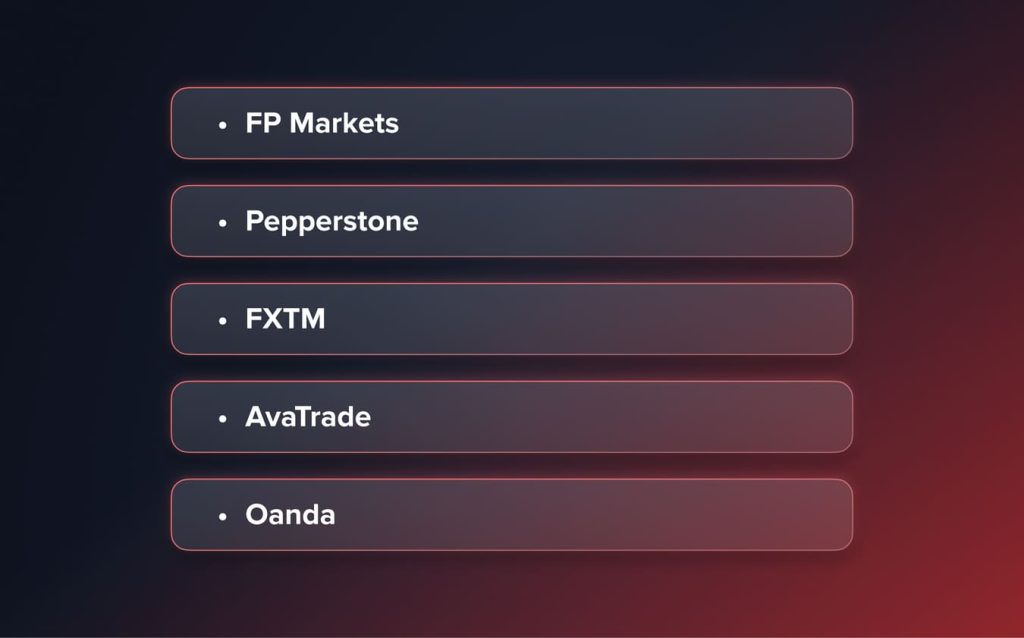
FP Markets
Regulated by top-tier ASIC and FSCA, FP Markets offers ECN execution with leverage to 1:500. Accounts start from just $100 with standard Islamic versions imposing a flat $2 commission across all pairs. MT4, MT5 and cTrader empower traders. Robust research tools and global data centres underpin reliable, commission-free trading on forex, indices, commodities and cryptocurrencies for clients worldwide.
Pepperstone
Dual regulation through ASIC and FSCA ensures prudent practices. MT4, MT5, cTrader and their own platform deliver a versatile workflow. Commission-free Standard Islamic accounts impose a minimum of $5 commissions. Negative balance protection and up to 1:500 leverage enhance safety. Multilingual phone and live chat support aid global Muslim traders expertly.
FXTM
One of the most well-rounded choices, FXTM allows traders to enable “swap-free mode” on any account except MetaTrader 5. They offer competitive spreads from 0.1 pips on major pairs and quality online platforms like MT4 and their own app. With regulation from top European watchdogs like CySEC and the FCA, FXTM provides a safe trading environment.
AvaTrade
Primary CySEC oversight with additional regulation through leading jurisdictions. Fixed or variable spread options suit varying needs. Account types easily convert to Islamic variations eliminating swaps. Comprehensive learning programs via AvaAcademy help navigate diverse, commission-reduced markets from a single account.
Oanda
Pioneering provider regulated by reputable authorities including FCA UK. MT4 alongside their platform empowers users. Edge accounts levy a fair $2 flat commission. Leverage extends to 500:1 on forex, precious metals, energies and indices. Ongoing webinars and partner resources aid all skill levels.
Together these brokers strike a suitable balance between competitive costs, robust oversight and versatile functionality serving Muslims’ requirements for permissible trading globally. Users can confidently manage risk as their skills progress.
Practical Use Case: Carry Trade Dilemma
To illustrate the prohibition of Riba, consider the “Carry Trade” strategy – a staple for conventional traders that is restricted for Islamic accounts.
- The Scenario: A trader buys the Australian Dollar (AUD) against the Japanese Yen (JPY) because AUD has a 4% interest rate and JPY has 0%.
- The Conventional Result: The trader earns the interest difference every night they hold the position. This is pure Riba.
- The Islamic Result: On a Swap-Free account, the trader does not earn that 4% interest. They only profit if the price of AUD increases against the JPY.
- The Lesson: Islamic trading focuses on price appreciation (trade) rather than yield (usury).
Best Practices for Sharia-Compliant Trading
If you are transitioning to an Islamic account, follow these four pillars to ensure your activity remains ethical and compliant:
- Verify the Sharia Certificate: Don’t just take the broker’s word. Check if their Islamic account is certified by a recognized Sharia Advisory Board (e.g., Amanie Advisors or the Sharia Committee of a specific Islamic bank).
- Avoid “Over-Leveraging”: While high leverage is technically allowed by some brokers, many scholars argue that excessive leverage (>1:50$) mirrors gambling (Maisir) because the risk is no longer proportional to the underlying asset.
- Screen Your Assets: If trading stocks, use a Sharia screener to ensure the company doesn’t deal in prohibited industries (alcohol, gambling, pork, or high-debt financial services).
- Monitor the “Storage Fee” Transition: Some brokers offer “Swap-Free” for only the first 7 days. After that, they may charge a “Storage Fee.” Ensure this fee is a flat administrative cost and not a disguised interest rate.
Checklist: Is Your Trade Sharia-Compliant?
Before clicking “Buy” or “Sell,” run your trade through this quick four-point audit to ensure it aligns with Islamic principles.
- Account Type: Am I using a verified Swap-Free account to avoid Riba?
- Asset Nature: Is this a Spot transaction? (Avoid Futures, Options, and Swaps unless using specific Islamic structures).
- Ownership: Do I have “constructive possession” of the asset? (The trade should settle in my name immediately).
- Ethical Standing: If trading stocks or commodities, have I verified that the underlying company or material is not involved in Haram industries?
Conclusion
In conclusion, Islamic trading accounts have enabled Muslims to actively participate in global financial markets in accordance with Sharia principles through alternative operating models that remove problematic interest charges. With careful broker selection and proper risk management, traders of all faiths can benefit.

